 PA 117
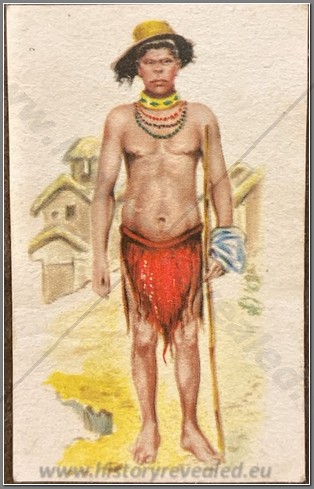
Unidentified European chromo of a native of Fernando Poo.
Price: $30.00

PA 117
Unidentified European chromo of a native of Fernando Poo.
Price: $30.00
 PA 115
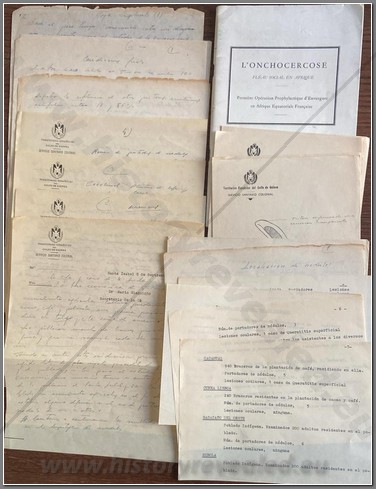
Archive of manuscripts and documents from Dr. Domingo Gonzalez Vicente to his boss, Dr. Mario Giaquinto, Secretary of the Colonial Health Service of the Spanish Territories of the Gulf of Guinea. It relates to an outbreak of onchocercose (river blindness) in Spanish Guinea in 1954. Several manuscripts discussing the problem is confined to the mobile workers in the forest in the area of Santa Isabela and San Carlos and that studies need to be carried out. It calls for urgent action given the limited number of personnel and the time needed to conduct proper surveys and investigations. It goes on to discuss the number of people surveyed, ages, number of infected case, symptoms of the infection, etc for each specific area (ie. San Carlos, public villages (with samples from different schools), different plantations, etc). Detailed findings for both the colonial and indigenous popultions showed that Onchocerciasis was present but clinically mild in this population and that severe manifestations (elephantiasis, systemic decline) were rare or imported. The overall summary is that the return of onchocerciasis to Fernando Poo is probably due to human movements. The first case on the island was described by Pérez and dates from 1911.The distribution on the island is not uniform, showing clear differences between zones, with more cases in the north of Fernando Poo than in the south. In the south, cases are very rare. According to the present data, more intense foci are found in areas near watercourses, particularly in forested zones. The rivers of Fernando Poo are not, for the moment, highly endemic foci. We have considered, taking into account the distance from the coastline, that the main reservoir of infection on the island is human. In the entire area studied, a total of 100 carriers of onchocercal nodules were found, which represents 2.5% of the population examined. The disease is more frequent in adults than children and most common in the forest zone. Onchocerciasis exists, but its endemic status is not yet proven. Current data are insufficient for firm conclusions. More surveys and better organization are needed. Human movement and plantation labor contracts are likely the key drivers of transmission, not the island itself. There is a statistical annex at the end. The report is 16 pages long, with an additional 11 pages of study details. An additional 12 pages of drawings of the virus and a booklet titled L’Onchocercose Fleau Social en Afrrique. Premiere Opetation Prophylactique d’Envergure en Afrique Equatoriale Francaise. A 39 page book from the library of Dr. Vicente as well as an invoice to him from the Real Automovil Club de Espana. SOLD
Price: $900.00
Note: Dr. Mario Giaquinto was an Italian expert on tropical diseases. A member of WHO, he is quote in the book Mikomeseng: Leprosy, Legitimacy and Francoist Repression in Spanish Guinea, by David Brydan.
 PA 114
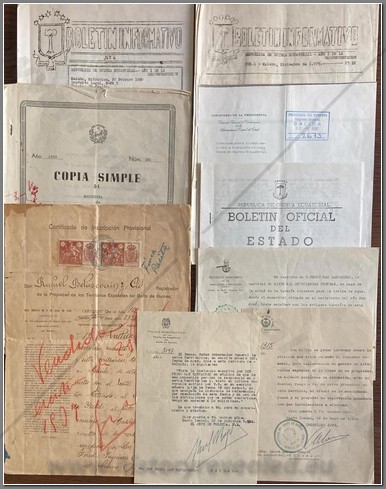
Collection of 10 documents from Equatorial Guinea, both before and after independence. Shown are an official 6 page state bulletin from the military council dated 1980; two (#1 and #4) 1979 news bulletins (stated as the first year of Reconstruction following the coup), announcing new government activities; a 1959 colonial document from a settler requesting a property deed; a colonial 1954 police document allowing residency to a settler; a colonial 1961 receipt and cover letter for the cost of installing pipeline from the San Jose River spring to the Missionary Religious School at Basile; a colonial 4 page 1928 property registration for a farm in Basile-Santa Isabel; a colonial 1958 copy of a 4 page deed of sale for a property located in Santa Isabel; a fascinating document issued by the government in 1980 to grant social assistance to help Spanish settlers “who fled after the declaration of independence…in order to facilitate their reintegration into Spanish life and help alleviate the loss of jobs and household goods”. SOLD
Price: $800.00
 PA 113
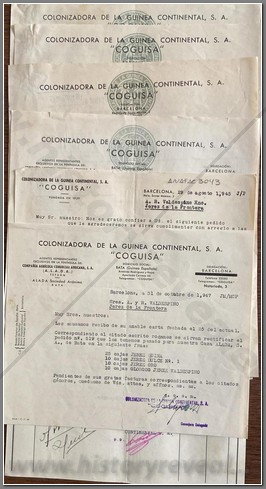
Collection of 6 documents (invoices and letter) from the COLONIZADORA DE LA GUINEA CONTINENTAL, SA. COGUISA, dated 1945-1947.
Price: $240.00
NOTE: The Colonizadora de la Guinea Continental, SA. “Coguisa” was incorporated in 1926, the same year that the Muni River colony and several islands were unified to form the colony of Spanish Guinea. COGUISA operated during the last decades of the Spanish colony, managing lands, plantations, and economic activities under the colonial administration. It ceased operations when the colony became independent in 1968.
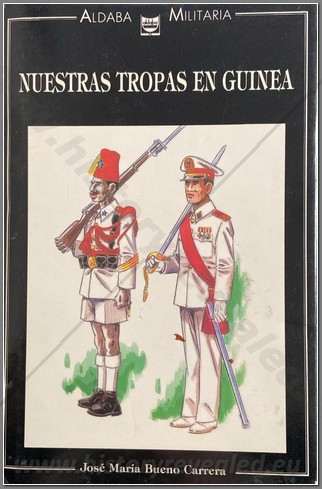 PA 112
Nuestras Tropas en Guinea, by Jose Maria Bueno Carrera. EhanKH
Price: $90.00
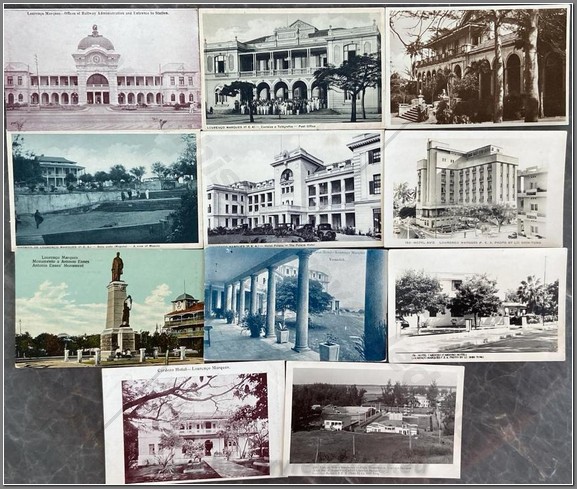 PA 111
11 postcards of colonial structures in Lourenco Marques, Mozambique. SOLD
Price: $330.00
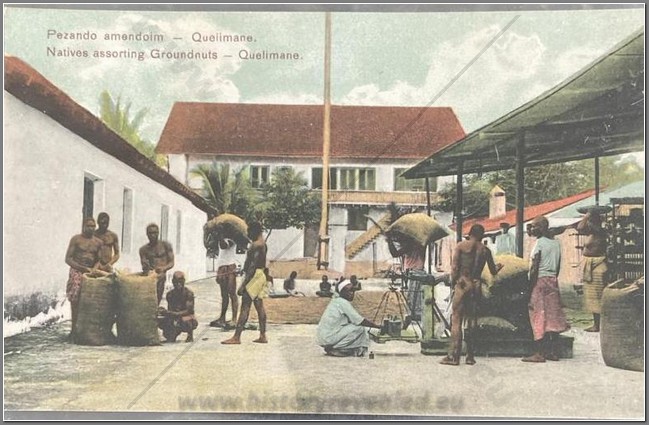 PA 110
Colonial postcard of natives sorting groundnuts in Quelimane, Mozambique.
Price: $30.00
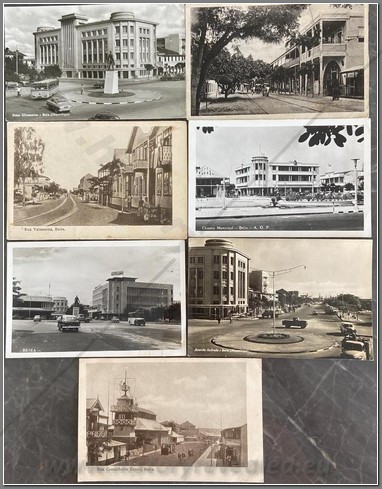 PA 109
7 postcards of colonial structures in Beira, Mozambique. SOLD
Price: $210.00
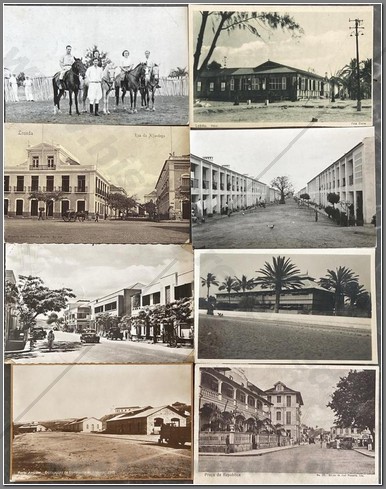 PA 108
8 colonial period postcards of colonial life and architecture in Angola, specifically Lobito, Dundo, Loanda and Porto Amboim. SOLD
Price: $240.00
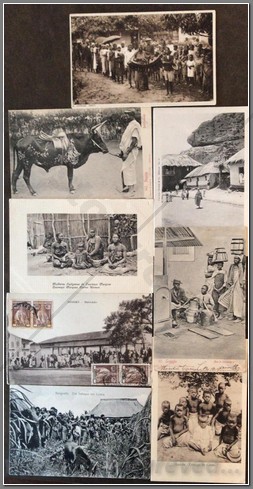 PA 107
10 colonial postcard of native life in Mozambique Angola and Bissau. Shown are local markets, using a bull as a substitute for a horse, a wedding party, drawing water (?), local architecture, family life.
Price: $300.00