France/Italy/UK 20th Century Political Movements

fa386FA 386


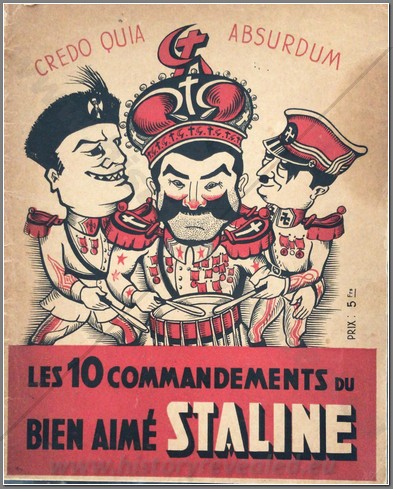
Les 10 Commandements du Bien Aime Staline. edited by the Anti-Fascist Committee to Combat the Dictadures of Hitler, Mussolini and Stalin, published shortly before the war. Worldcat shows only two European libraries hold this. Rare.

Price: $400.00

fa385FA 385


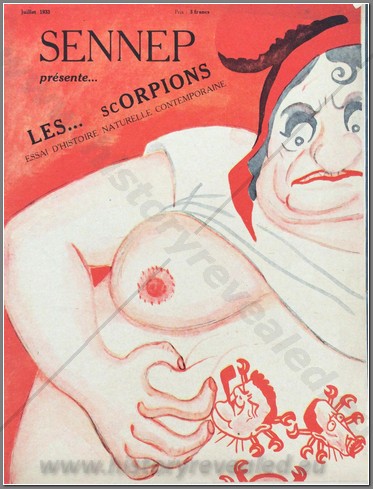
A one-off magazine sold at French newsstands, July 1933. It is an essay by famed caricaturist and illustrator, Jean Senep. Titled Les Scorpions, it is a scathing attack on the politics of the day. Only 200 copies made. This is an uncirculated copy and rare as such. Not shown in Worldcat.

Price: $350.00

fa384FA 384


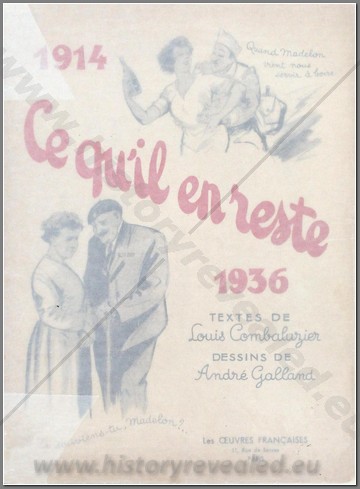
1914 Ce qu’il en Reste 1936. Text by Louis Combaluzier. 24 pages. Worldcat shows only 2 French universities hold this.

Price: $350.00

fa383FA 383

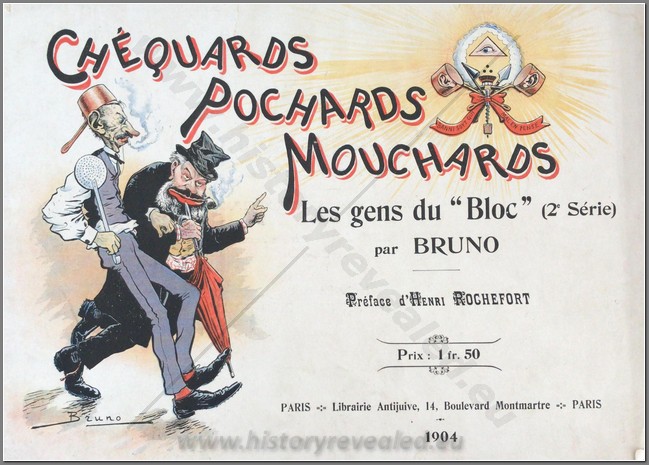
Chequards Pochards Mouchards. Les gens du “Bloc”, 2nd series, par Bruno. Preface by Henri Rochefort. An anti-semitic publication, 1904.

Price: $700.00

NOTE: Chéquards, Pochards, Mouchards – Les gens du "Bloc" (2e Série). "The people of the Bloc." Published by Librairie Antijuive, Paris, 1904. With a preface by the antisemitic writer Henri Rochefort (1831-1913). An antisemitic booklet featuring full-page large caricatures by Bruno. The caricatures mock Alfred Dreyfus, Theodor Herzl, and broadly vilify "the Jewish financiers." The Jewish figures are depicted in grotesque manner, with long noses, some resembling monkey-like faces. Each caricature is accompanied by a slanderous caption describing the scene. The title of the book is composed of derogatory terms: Chéquards - referring to wealthy Jews, those who receive or distribute checks, hinting at Jews involved in corrupt financial transactions. Pochards - "drunkards, " people who frequently consume alcohol. Mouchards - spies, traitors, those who provide information to the authorities and incriminate innocent people. And collectively, Les gens du "Bloc" - "The people of the Bloc." After Alfred Dreyfus’s final exoneration in a case that shook all of Europe, Dreyfus’s supporters and the Jews of France experienced a significant moral boost, especially following the public ceremony where his military ranks were restored, which was widely covered in the press. Between 1902 and 1905, France was governed by a left-wing party known as "Le Bloc Républicain" (The Republican Bloc). This was a period of stability during which France moved towards reforms and renewed alliances with Russia and Britain. During this time, French ministers insisted on reopening the Dreyfus Affair, which ultimately led to his complete exoneration. In response, the antisemitic right in France accused Jews, Freemasons, and other groups of taking over France. This booklet attempts to portray the collapse of French democracy into the hands of Jewish interests and the immense power of Jewish capitalists. Dreyfus himself is depicted as a manipulative genius who knows how to exploit the system's weaknesses for his personal gain.

fa382FA 382

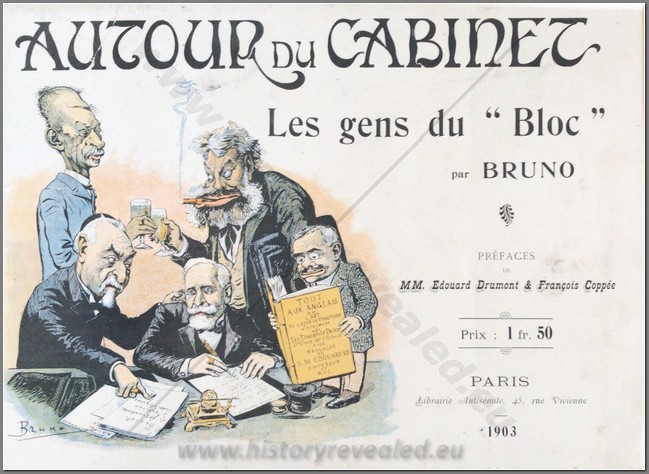
Autour du Cabinet. Les gens du “Bloc (par Bruno). Preface by Edouard Drumont & Francois Coppee. An anti-semitic publication, 1904.

Price: $700.00

NOTE: Edouard Drumont (1844-1917) founder in 1889 of the French Anti-Semitic League was a leading member of the anti-Dreyfusards. Similarly, writer Francois Coppee (1842-1908) took a leading role in the Dreyfus affair. This volume caricatures many of their shared targets including, Alfred Dreyfus, Emile Zola, Joseph Reinach, Jean Jaures, Abbe Combes, etc.

fa381FA 381


23 photos of Italian fascist youth during the 1930’s.

Price: $1400.00

fa380FA 380fa380aFA 380

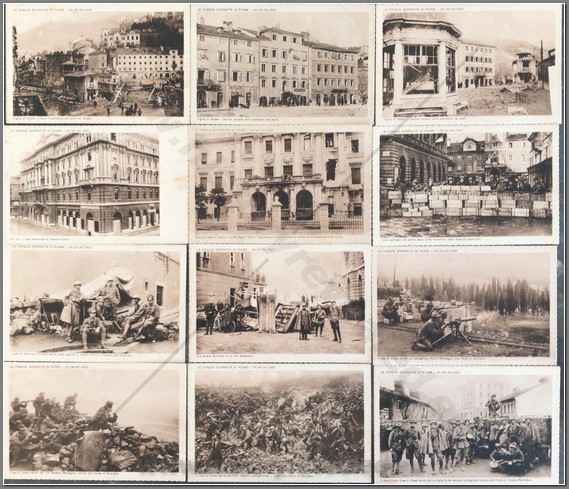
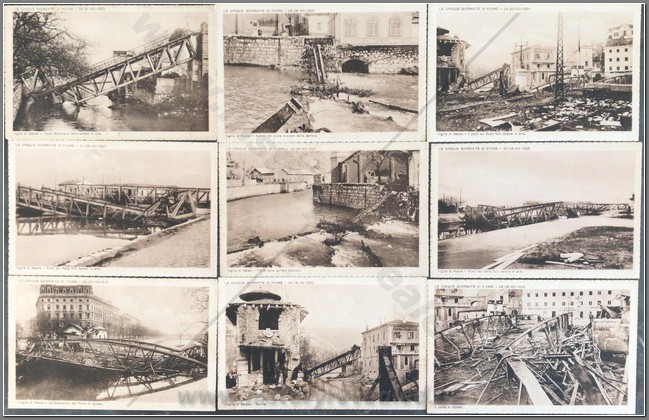
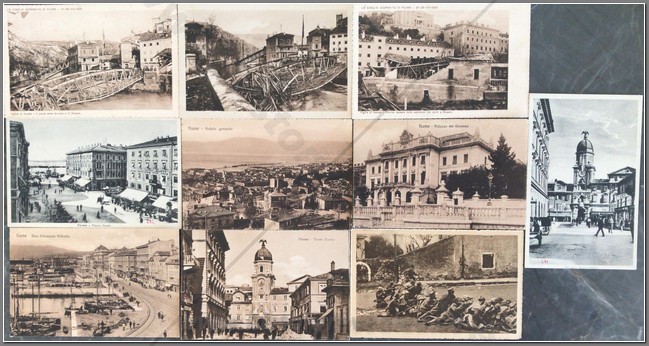
33 postcards showing the short-lived Free State of Fiume during the “Bloody Christmas” actions of December 24-30, 1920. 

Price: $900.00

Note: After WW1 and the demise of Austria-Hungary, the question of the status of Fiume became a major international problem. At the height of the dispute between the Kingdom of Serbs, Croats, and Slovenes (later called Yugoslavia) and Italy, the Great Powers advocated the establishment of an independent buffer state. U.S. President Woodrow Wilson became the arbiter in the Yugoslav–Italian dispute over the city. Wilson suggested that Fiume be set up as an independent state and, indeed, as a potential home for the League of Nations organization. The dispute led to lawlessness, and the city changed hands between a South-Slav National Committee and an Italian National Council, leading finally to the landing of British and French troops, who took over the city. The National Council overstamped Austro-Hungarian notes – the Fiume Kronen – which were used as official currency. The confusing situation was exploited by Italian poet/general Gabriele D'Annunzio, who entered the city on 12 September 1919 and began a 15-month period of occupation. A year later, after failure of negotiations with the Italian government, D'Annunzio proclaimed the Italian Regency of Carnaro.

fa380a1FA 380On 12 November 1920, the Kingdom of Italy and the Kingdom of Serbs, Croats, and Slovenes signed the Treaty of Rapallo, whereby both parties agreed to acknowledge "the complete freedom and independence of the State of Fiume and oblige to respect it in perpetuity". With that act, the eternal "Free State of Fiume" was created, which, it turned out, would exist as an independent state for about four years. The newly created state was immediately recognized by the USA, France, and the UK. D'Annunzio refused to acknowledge the agreement and was expelled from the city by the regular forces of the Italian Army, in the "Bloody Christmas" actions from 24 to 30 December 1920. Control over the Free State was in an almost constant state of flux. Following the departure of D'Annunzio's troops in December 1920, the Italian National Council of Fiume reassumed control and appointed a provisional government. A pact with the local Italian commander handed control to the military on 18 January 1921.

t-epm291EPM 291

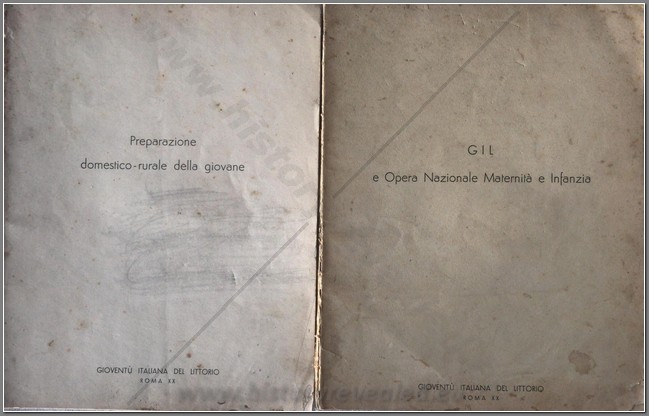
Two fascist Italian guidebooks for mothers, produced in 1942 by Gioventu Italiana del Littorio. One is Preparazione Domestico-rurale della Giovane and the other is GIL e Opera Nazionale Maternita e Infanzia. The first one is not to be found in Worldcat only one German library holds the second. Quite rare.

Price: $700.00

t-epm290EPM 290

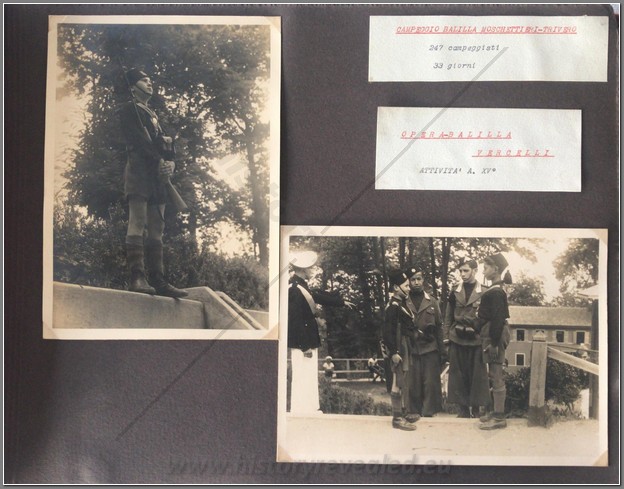
1937 official photo album of fascist youth camps at Vercelli. The boys youth camp at Vercelli was attended by 247 boys and lasted 33 days, while the girls camp was attended by 200 girls (in four shifts) for 62 days. One stadium photo shows the children forming lines to spell DUCE. The caption on the photo reads “faith, grace, harmony of three thousand young people”. Different aspects of the training are shown: skiing, drilling, introduction to flying, music training, membership recruitment, works on display, female education, fascist drafting, returning to camp. Many statistics by youth category of the number of participants and graduate and in some cases showing the financial cost. 48 photos, well captioned. The photo studio that took the photos was G. De-Fabianis, Foto-Cine at Corso C. Alberto 47, Vercelli.

Price: $1500.00

t-epm288EPM 288

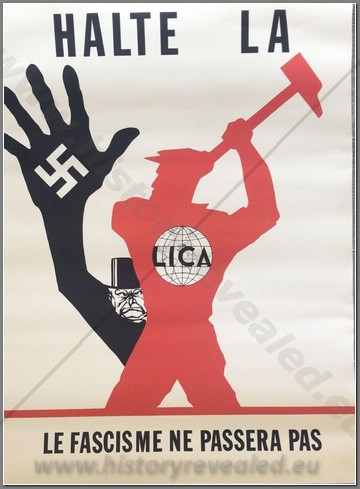
1970 reproduction of a 1930’s poster HALTE LA. LE FASCISME NE PASSERA PAS, published by LICA (the International League Against Anti-Semitism in North Africa.

Price: $200.00

Note: The International League Against Anti-Semitism in North Africa (LICA) was founded in order to address French-Jewish anxieties that fascist and antisemitic ideas would spread from Europe to the indigenous population of France’s colonies. Because of this rising concern, the organization sought a Jewish-Muslim partnership in order to combat common racist and antisemitic language and action prevalent in the 1930’s. (Hasan also put in Algeria, Holocaust Studies and Palestine pre-1948)

t-epm287EPM 287


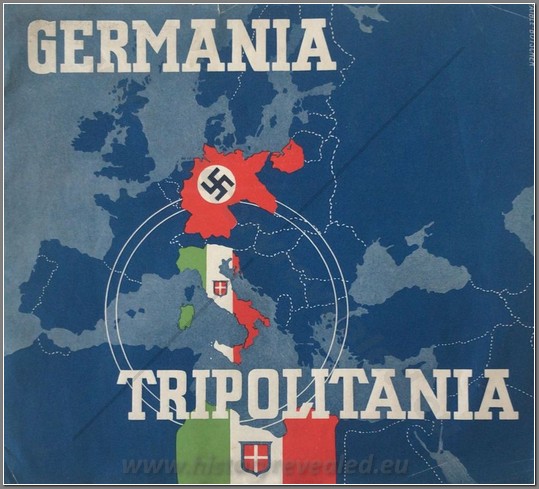
German brochure handed out at the Tripoli trade fair held on March 1 to April 15, 1937. It discusses trade between Germany and Italy and promotes both Italian and German economic interests. Rare.

Price: $290.00

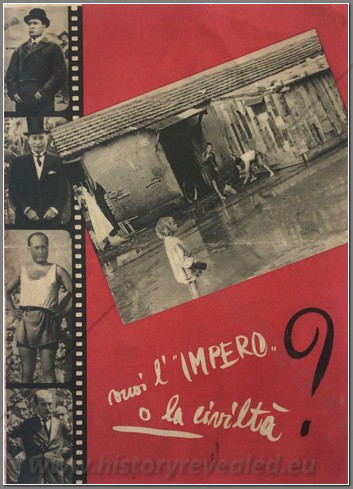
t-epm286EPM 286Rare anti-fascist flyer created by the Italian Republican party, printed in 1943. It contrasts Italy’s empire and fascism, with the effect on the people during the war. It then presents an optimistic view under the Republicans. Rare.

Price: $300.00

Note from Wikipedia: The Republican party (PRI) is the oldest political party in Italy that is still standing. In exile under Mussolini, it reemerged after July 25,1943 with the resumption of the publication of La Voce Repubblicana , proclaiming the reconstitution of the Italian Republican Party in Rome. Furthermore, on 9–10 October of the same year a new Congress of the party in exile was held in Portsmouth and on the following 5 December in Milan a clandestine Congress of Upper Italy.

The PRI decided not to be part of the National Liberation Committee (CLN) , the assembly of anti-fascist parties created after 8 September 1943 . The republicans, always hostile to the Savoys , did not approve of the CLN's choice to consider the monarchy legitimate

The war of resistance saw the participation of many republicans always through their own armed formations called the Mazzini Brigades, especially after the liberation of Rome

On 2 June 1946, with the institutional referendum, the Italian people chose the republican form and the PRI finally saw its fundamental prejudicial satisfied. The phase of participation in the governments of the Italian Republic therefore began in the party's politics.

t-epm281EPM 281


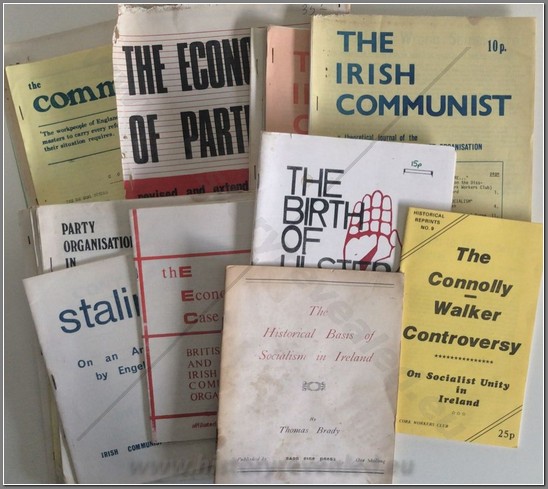
Archive of 23 publications by the Irish Communist Party and the British & Irish Communist Organization from 1969-1975. Includes 5 issues of the Irish Communist, 7 issues of The Communist, a number of other publications by the British & Irish Communist Organisation, the Birth of Ulster Unionism, the Cork Workers Club.

Price: $900.00

t-epm280EPM 280


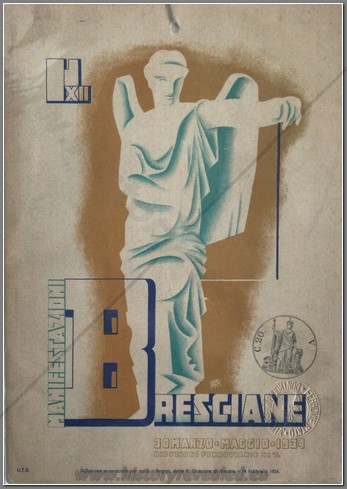
Interesting announcement promoting events in Brescia between March and May 1934, offering a 50% discount on rail fairs to Brescia during that time.

Price: $150.00

t-epm279EPM 279t-epm279aEPM 279


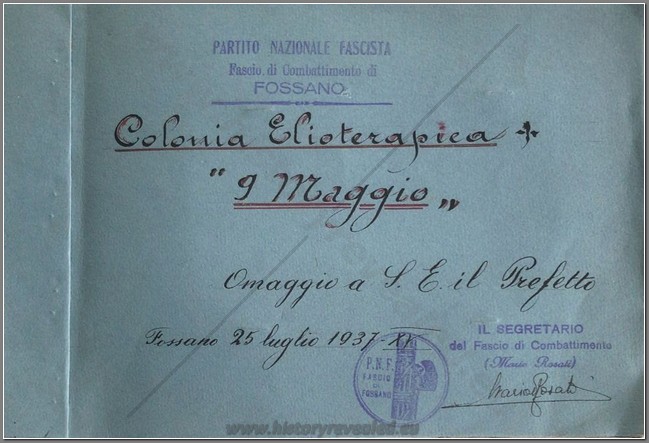
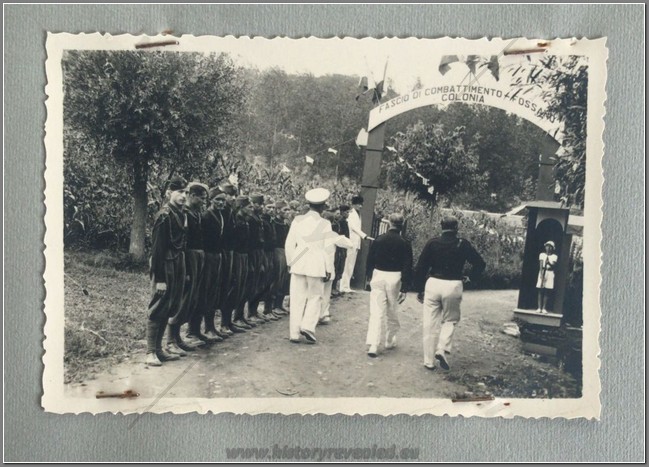
Official photo album belonging to Mario Rosati, Il Segretario del Fasccio di Combattimente, during a visit to a fascist youth camp in Fossano Italy, July 25, 1937. 19 photos, no captions.

Price: $600.00

t-epm275EPM 275


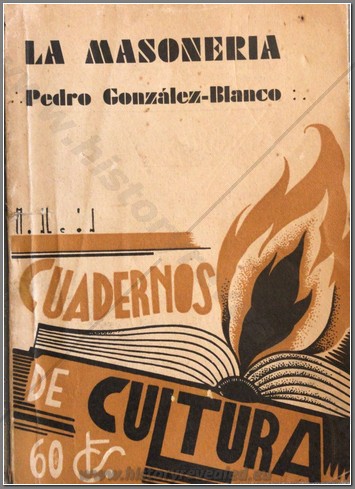
La Masoneria, by Pedro Gonzalez-Blanco. Printed in Valencia in 1933. 48 pages. B

Price: $90.00

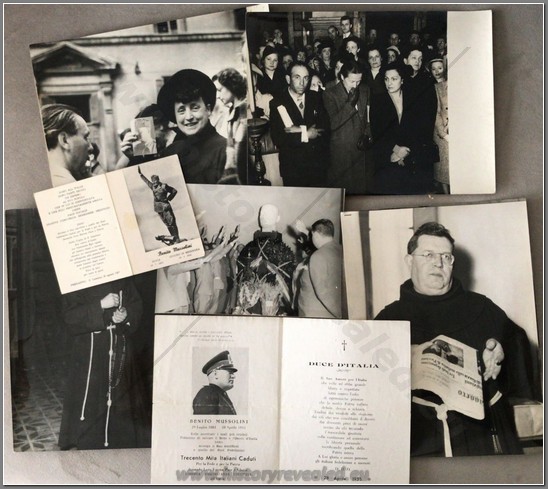
t-epm266EPM 266Ephemera related to the reinternment of Mussolini’s body in Predappio, Italy in 1957. B

Price: $300.00

Note: After Mussolini’s corpse was hung up on meat hooks on April 29, 1945, in Piazzale Loreto in Milan, where citizens vented their fury at their former leader, he was buried in an unmarked grave in a nearby cemetery. A year later, neo-Fascist loyalists dug up his body and hid it in a convent in Lombardy until 1957, when the remains were returned to Mussolini’s widow, who buried them in the family crypt in Predappio.

t-epm265EPM 265


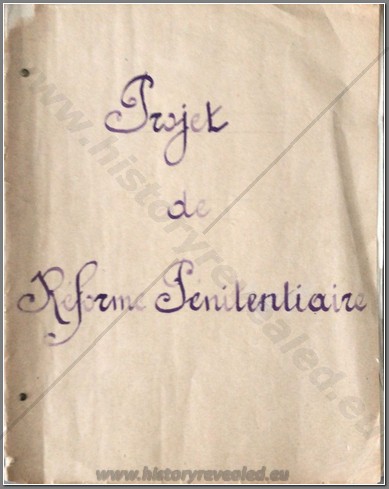
Unpublished manuscript for a project of prison reform in France. 15 pages, with authors name at back. B

Price: $250.00

t-epm262EPM 262


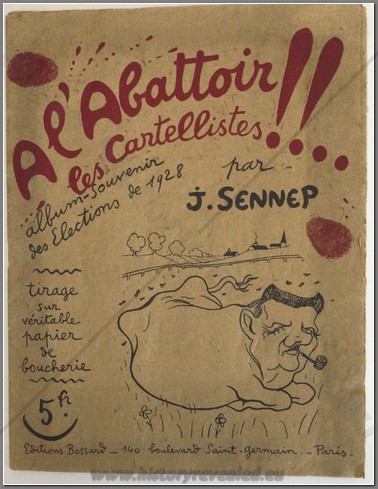
Al’Abattoir les Cartellistes!! Album-Souvenir des Elections de 1928. Translated as At the Slaughterhouse, the Cartelists. Shows Édouard Herriot, Minister of Education as a cow. The paper is the same paper the butcher wraps meat in. B

Price: $180.00

t-epm255EPM 255


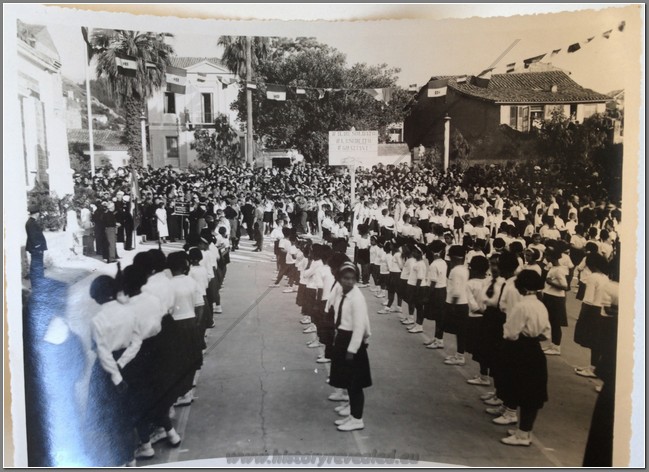
1938 large format photo of a fascist youth rally in Southern Italy. B

Price: $30.00

Copyright © 2013-2024 History Revealed