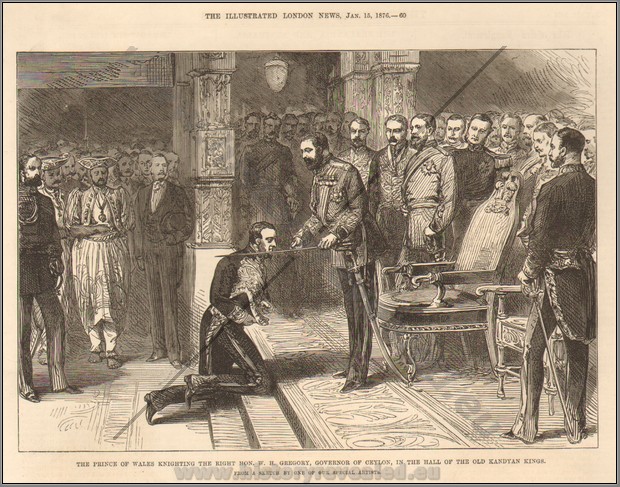
 SAPE 072
Collection of 15 illustrated pages of 19th century colonial life in Ceylon and the royal visit in 1876. B
Price: $230.00
 SAPE 072 SAPE 072 | 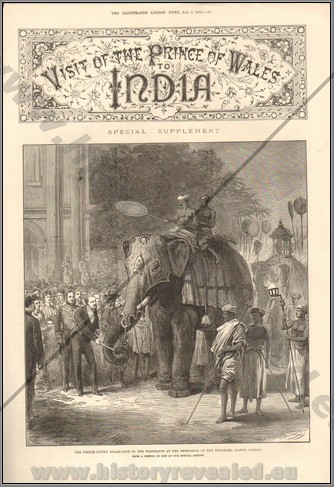 SAPE 072 SAPE 072 | 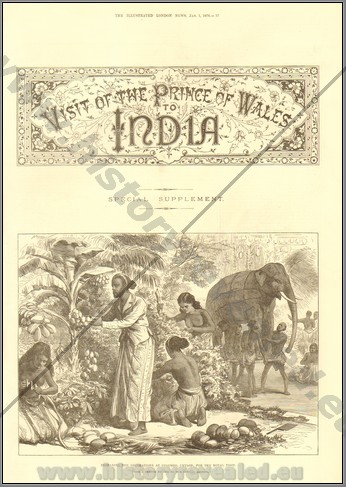 SAPE 072 SAPE 072 |  SAPE 072 SAPE 072 |
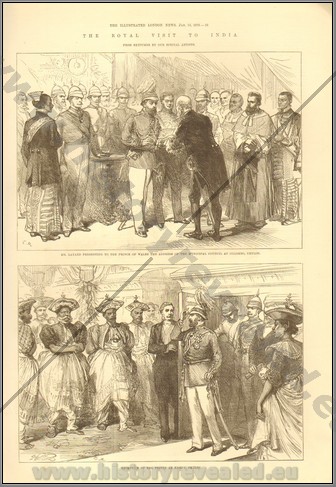 SAPE 072 SAPE 072 | 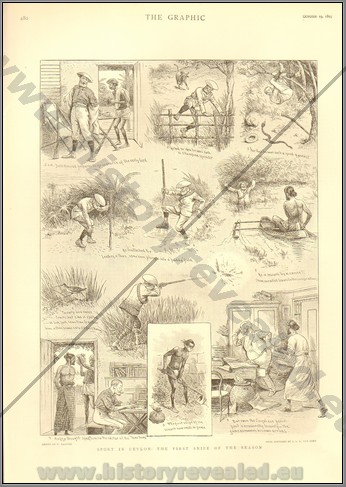 SAPE 072 SAPE 072 | 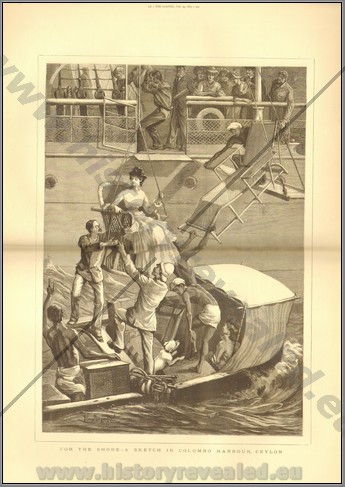 SAPE 072 SAPE 072 | 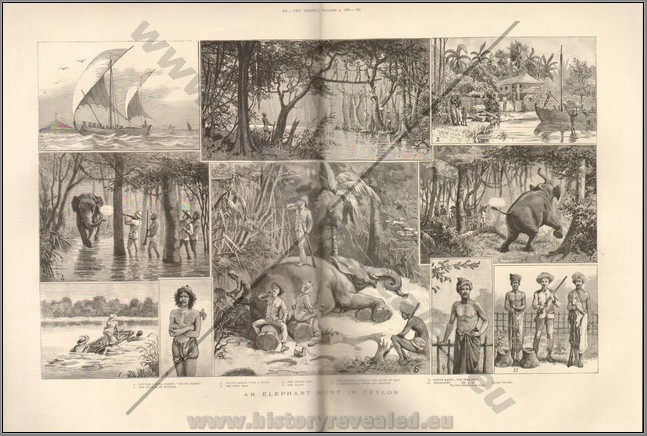 SAPE 072 SAPE 072 |

SAPE 072
Collection of 15 illustrated pages of 19th century colonial life in Ceylon and the royal visit in 1876. B
Price: $230.00
| SAPE 072 | SAPE 072 | SAPE 072 | SAPE 072 |
| SAPE 072 | SAPE 072 | SAPE 072 | SAPE 072 |
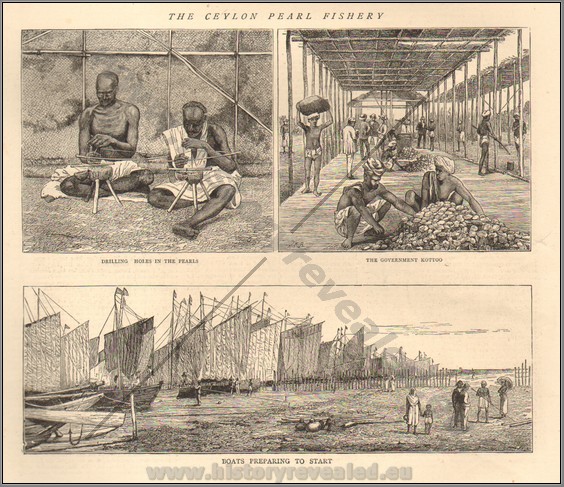 SAPE 071
1874 illustration of pearl fishing in Ceylon. B
Price: $30.00
 SAPE 068
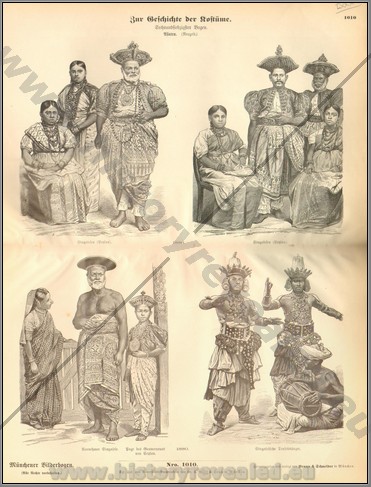
Mid-19th century German illustration of different Ceylonese costumes. B
Price: $60.00
 SAPE 066
 SAPE 066
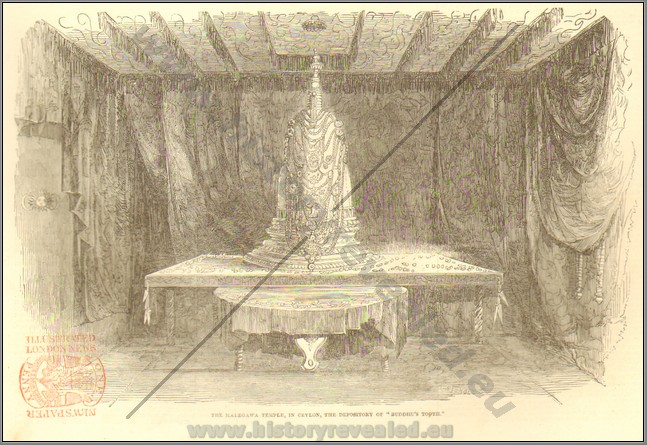
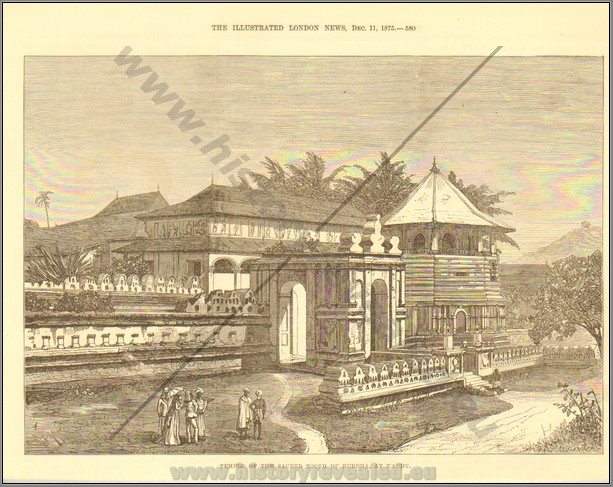
Collection of 6 English illustrated pages on the Sacred Tooth at Kandy and the Shrine of the Sacred Footprint in Ceylon, 1853-1901. B
Price: $120.00
 SAPE 066 SAPE 066 | 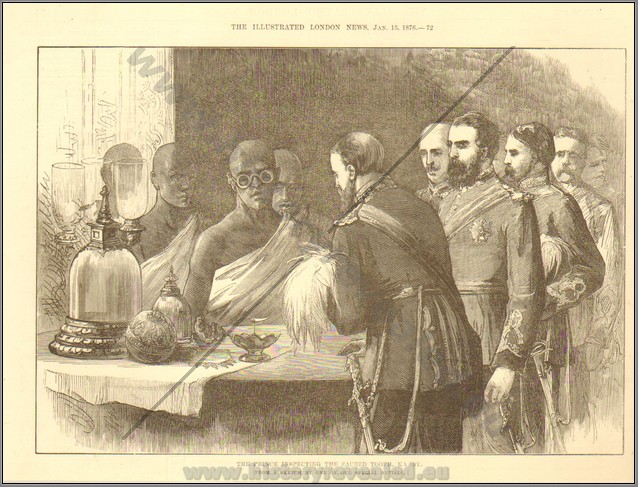 SAPE 066 SAPE 066 | 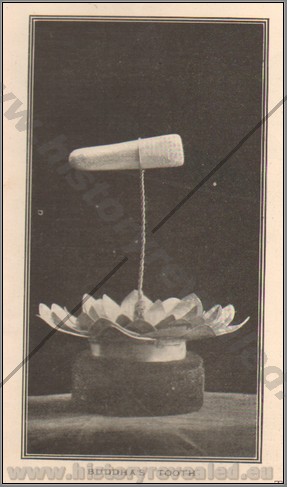 SAPE 066 SAPE 066 | 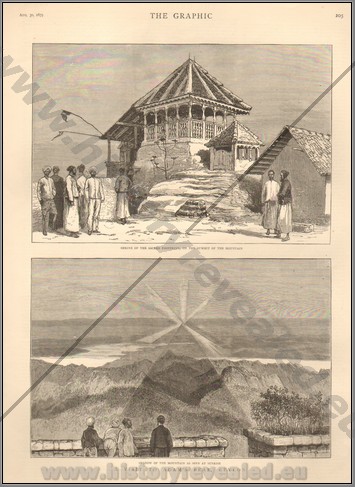 SAPE 066 SAPE 066 |
 SAPE 065
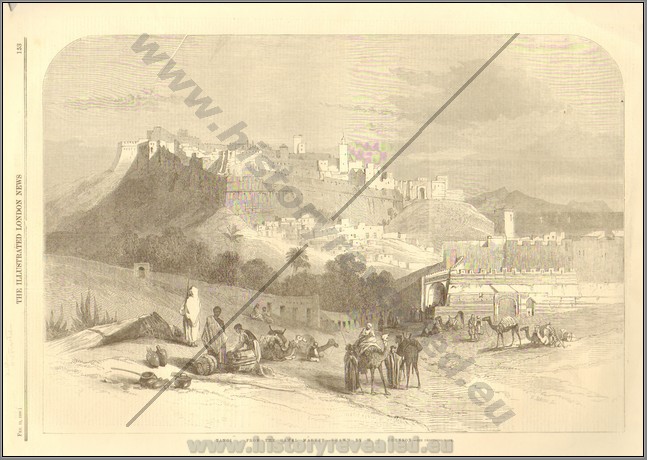
1860 illustration of Tangi, Pakistan. B
Price: $30.00
 SAPE 063
 SAPE 063
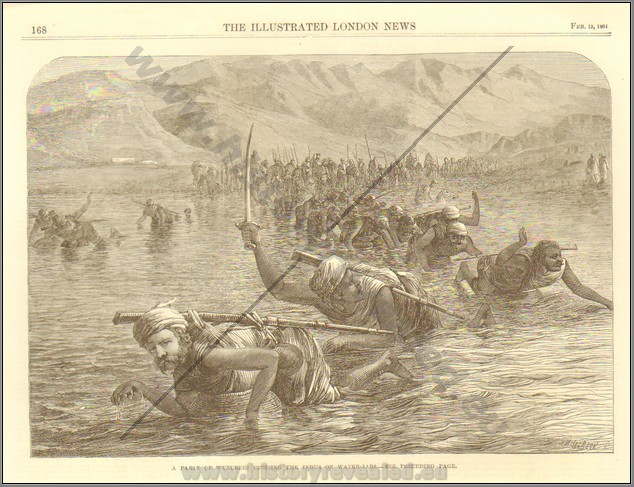
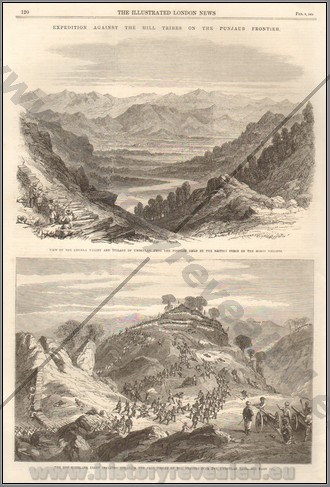
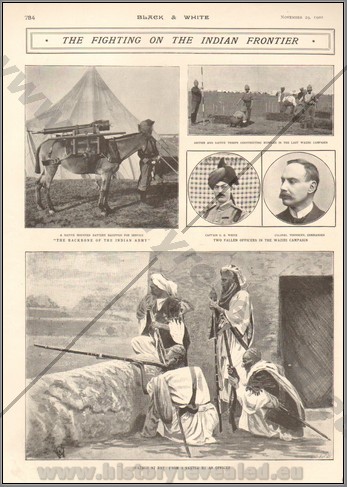
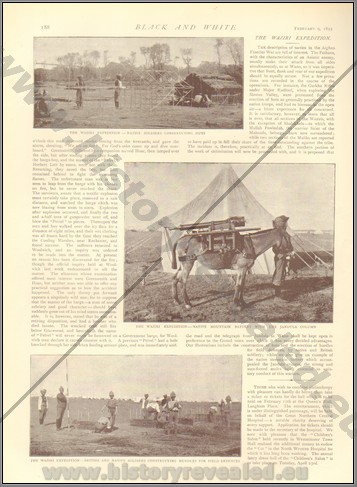
A collection of 9 pages from English periodicals (Black & White, ILN) dated 1863-1905 on the Waziri expedition of 1894 and other previous expeditions. B
Price: $150.00
Note: Waziristan is a section of mountain tract in the North-West Frontier Province of India, lying between the Tochi river on the north and the Gomal river on the south. The whole of Waziristan lied within the British sphere of influence, the boundary with Afghanistan being demarcated in 1894.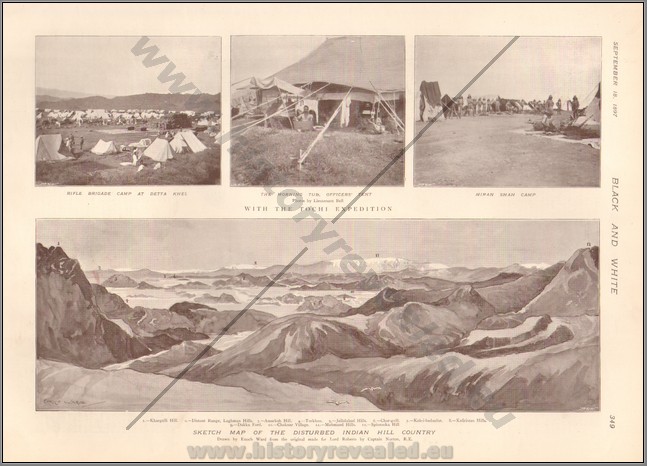 SAPE 063
 SAPE 063
British expeditions were needed against various sections of the Waziris in 1852, 1859, 1860, 1864, 1880, 1881, 1894, 1897 and 1902. The success of Sir Robert Sandeman in subduing the wild tribes of Baluchistan led to a similar attempt to open up Waziristan to British civilization; but the Pathan was much more democratic and much less subject to the influence of his maliks than the Baluchi was to the authority of his chiefs; and the policy finally broke down in 1894, when the Waziris made a night attack upon the camp of the British Commission at Wana. The Commission had been appointed to settle the boundary with the Afghans, and the Waziri regarded it as the final threat to their independence. The attack was delivered with such determination that the tribesmen penetrated into the center of the camp, and it was only with the greatest difficulty that friend could be distinguished from foe. 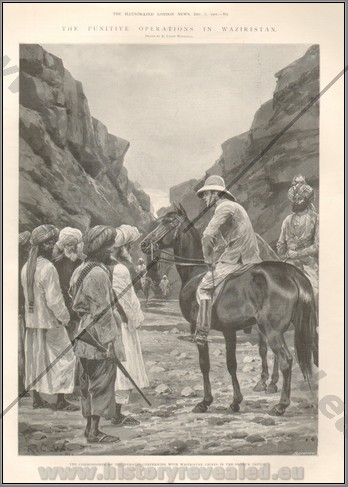 SAPE 063A larger force of 11,000 British troops subsequently traversed the tribal country, destroyed their towers and dictated terms, one of which was that the Tochi Valley should be occupied by British garrisons. But still there was trouble, which led to the Tochi expedition of 1897; and in spite of the further lessons taught to the Waziris in two expeditions in 1902, the attempt to “Sandemanise” Waziristan was given up by Lord Curzon. The British garrisons in the Tochi and Gomal valleys were withdrawn, and two corps of tribal militia, from 1300 to 1500 strong, were gradually formed to replace the British troops.
 SAPE 063 SAPE 063 | 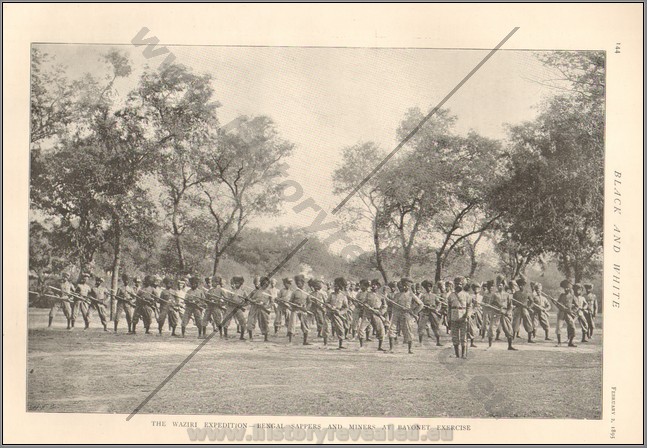 SAPE 063 SAPE 063 | 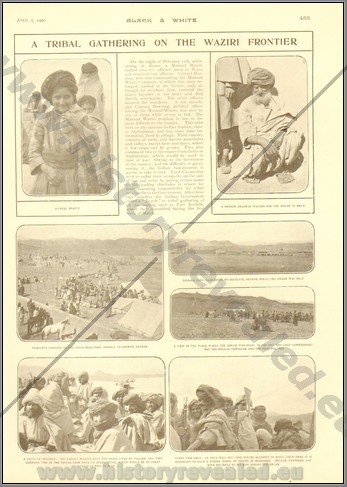 SAPE 063 SAPE 063 | 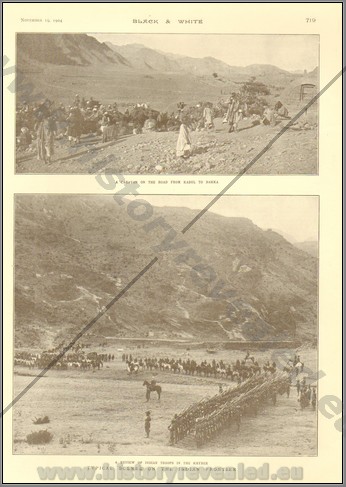 SAPE 063 SAPE 063 |
 SAPE 062
 SAPE 062
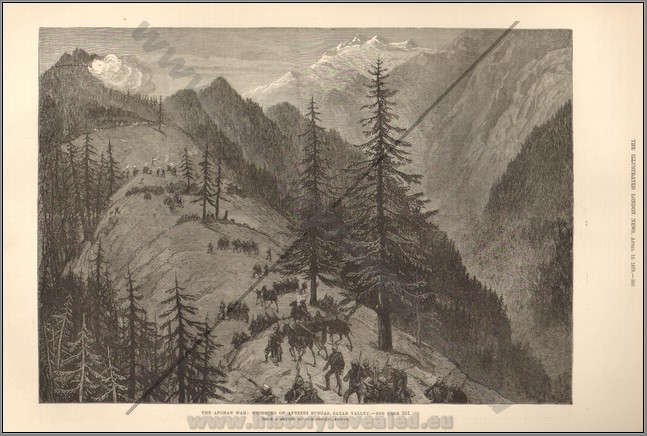
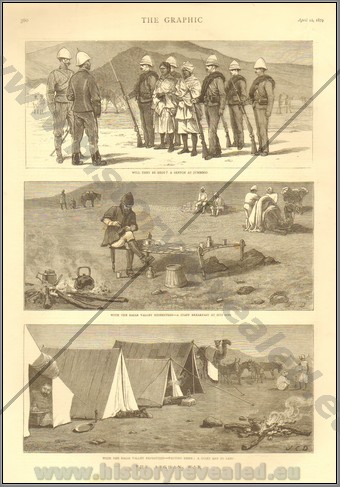
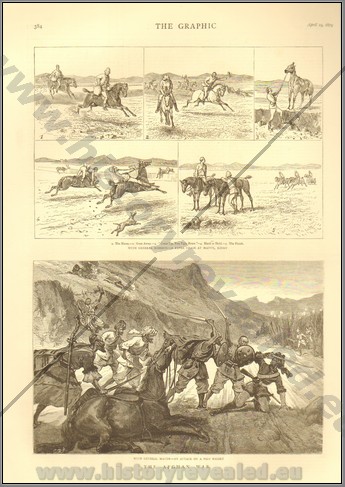
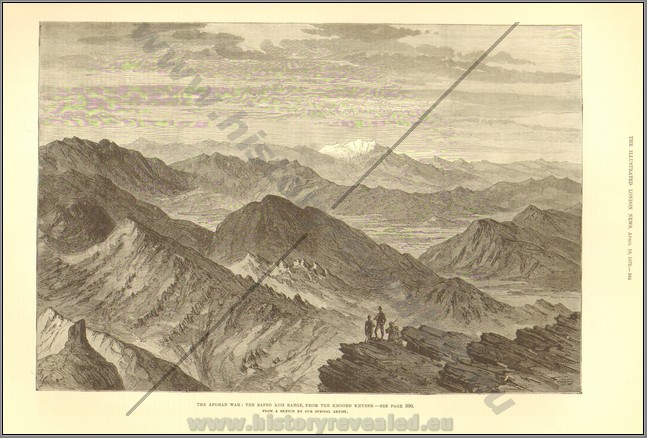
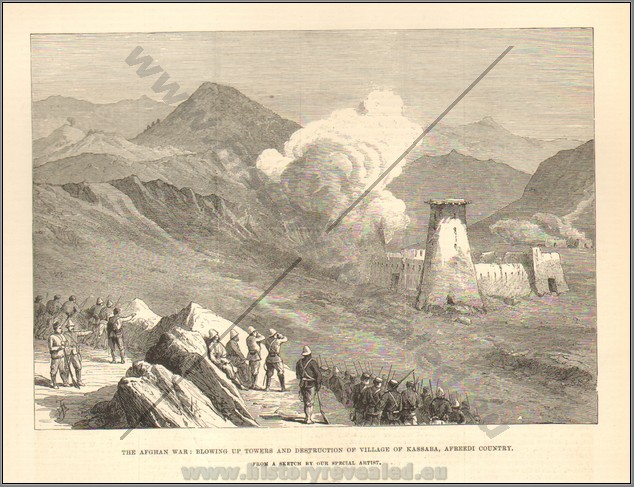
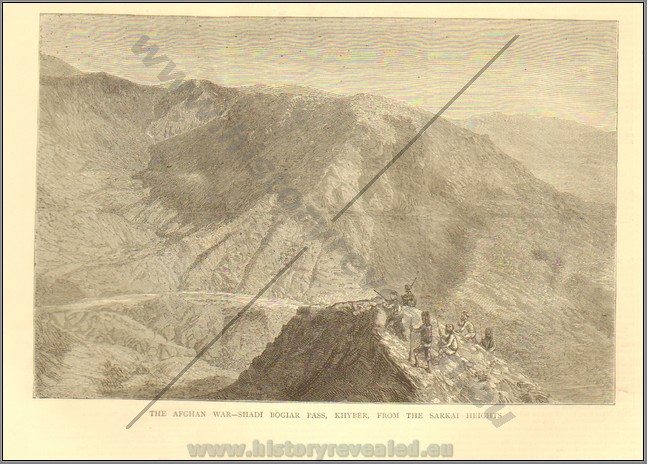
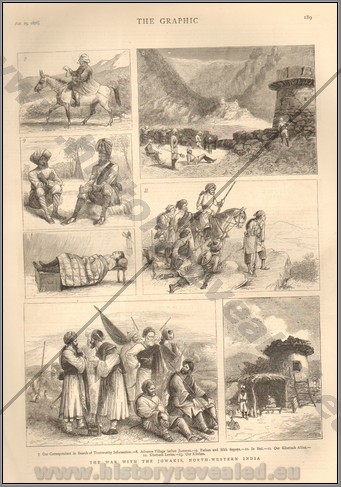
Collection of 17 illustrated pages from English periodicals on the expedition against the Afridis, or Jowakis, 1877-1879. B
Price: $380.00
Note: The Afridis are a Pathan tribe inhabiting the mountains on the Peshawar border of the North-West Frontier province of India. They are the most powerful and independent tribe on the border, and the largest with the exception of the Waziris. They derive their importance from their geographical position, which gives them command of the Khyber and Kohat roads, and the history of the British connection with them has been almost entirely with reference to these passes. There have been several British expeditions against the separate clans.
 SAPE 062
 SAPE 062There was an expedition against the Jowaki Afridis under Colonel Mocatta in 1877. In that year the government proposed to reduce the Jowaki allowance for guarding the Kohat Pass, and the tribesmen resented this by cutting the telegraph wire and raiding into British territory. A force of 1500 troops penetrated their country in three columns, and did considerable damage by way of punishment.
There was another expedition against the Jowakis Afridis, under Brigadier-General Keyes, in 1877-78. The punishment inflicted by the previous expedition did not prove sufficiently severe, the attitude of the Jowakis continued the same and their raids into British territory went on. A much stronger force, therefore, of 7400 British troops, divided into three columns, destroyed their principal villages and occupied their country for some time, until the tribe submitted and accepted government terms. The Kohat Pass was afterwards practically undisturbed.
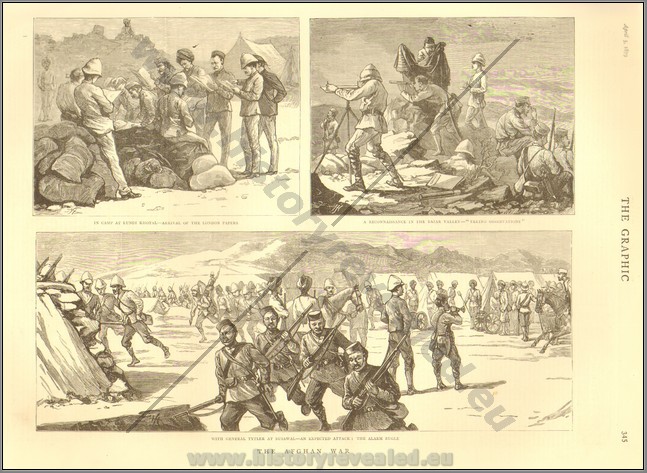 SAPE 062In 1878 Brigadier-General Tytler undertook an expedition against the Zakka Khel Afridis of the Bazar Valley. At the time of the British advance into Afghanistan during the second Afghan War, the Zakka Khel opposed the British advance and attacked their outposts. A force of 2500 British troops traversed their country, and the tribesmen made their submission.
Lieutenant-General Maude followed up with an expedition of the Zakka Khel Afridis of the Bazar Valley in 1879. After the previous expedition the Afridis of the Khyber Pass continued to give trouble during the progress of the second Afghan War, so another force of 3750 British troops traversed their country, and after suffering some loss the tribesmen made their submission.
 SAPE 062 SAPE 062 | 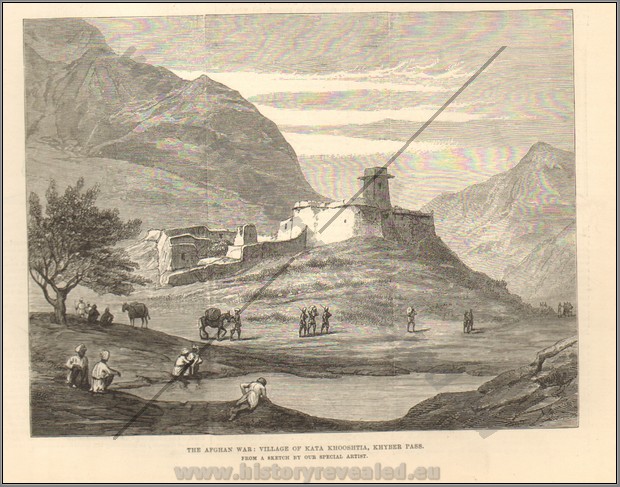 SAPE 062 SAPE 062 | 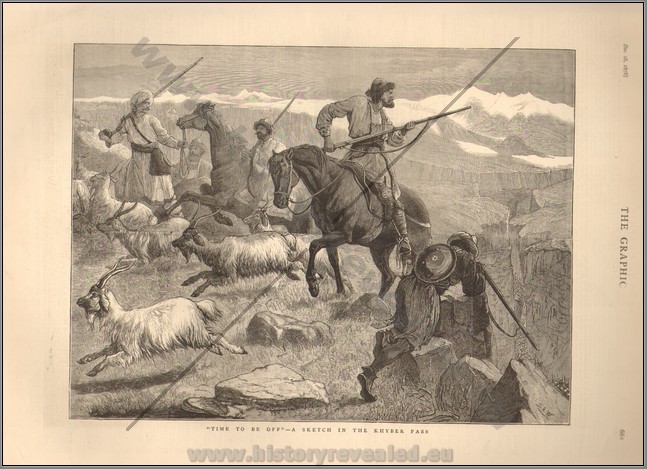 SAPE 062 SAPE 062 |  SAPE 062 SAPE 062 |
 SAPE 062 SAPE 062 | 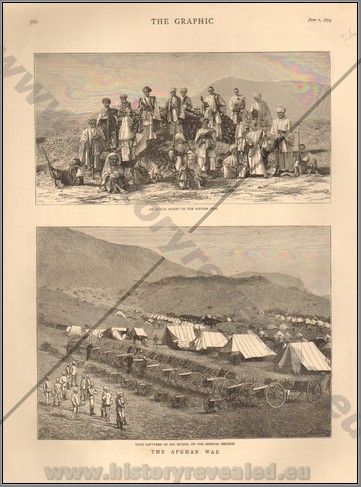 SAPE 062 SAPE 062 | 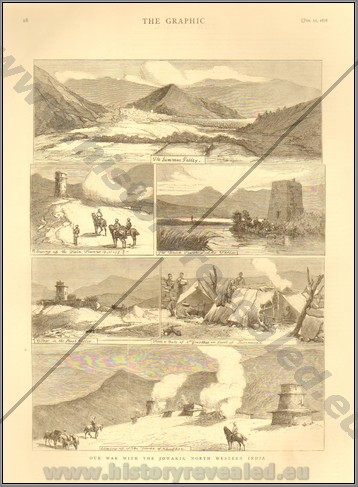 SAPE 062 SAPE 062 | 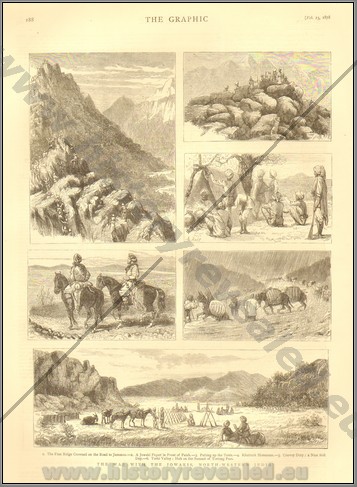 SAPE 062 SAPE 062 |
 SAPE 062 SAPE 062 | 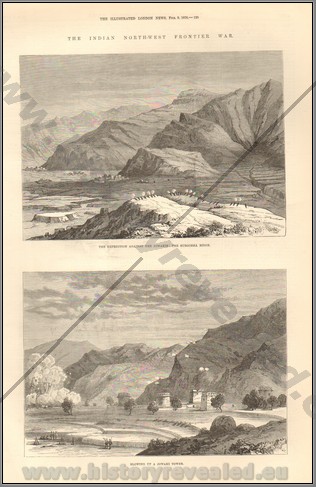 SAPE 062 SAPE 062 |  SAPE 062 SAPE 062 | 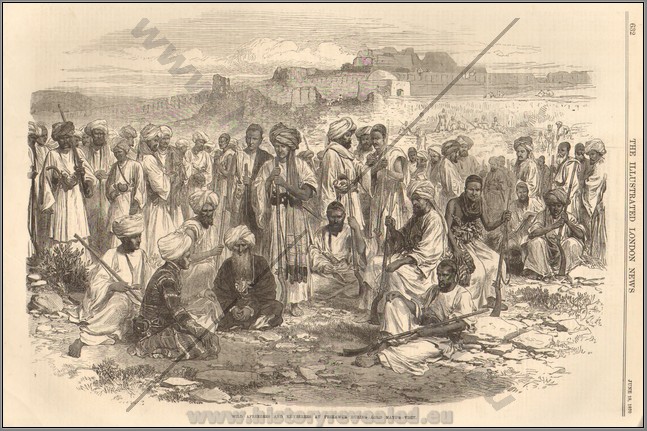 SAPE 062 SAPE 062 |
 SAPE 061
1874 page from the Illustrated London News showing different natives of Kafiristan and Dardistan, with complete text. B
Price: $35.00
 SAPE 060
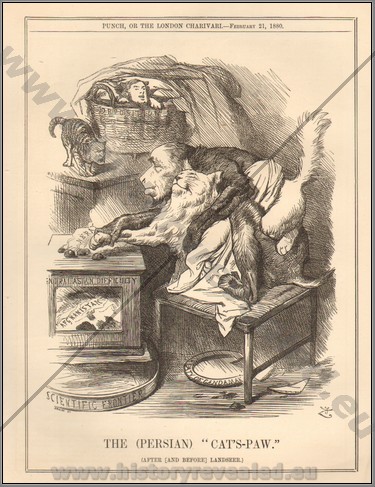
1880 Punch cartoon titled The Persian “Cat’s-Paw”, with Disraelis reaching for Herat. B
Price: $25.00
 SAPE 059
 SAPE 059
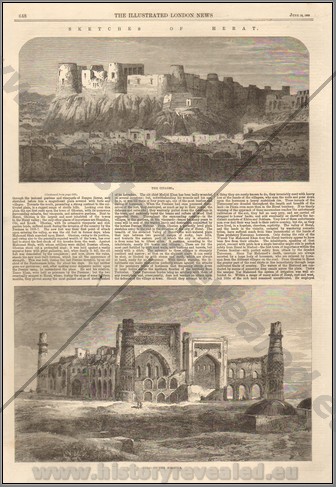
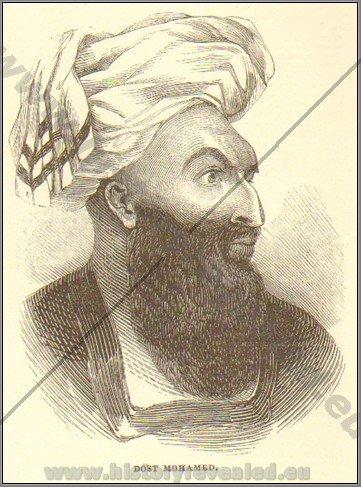
Collection of 4 pages dating from 1855-1863, from the Illustrated London News on the occupation of Herat, 1856-1857. B
Price: $100.00
Note: The independent rulers of Herat always turned to the Iranians for support against re-absorption into the Afghan kingdom. After complicated negotiations between Shah Nasr ed-Din and local Afghan provincial rulers, and despite British warnings, Persian troops occupied Herat in October, 1856. The British, whose policy it was to maintain the independence of this city, declared war against Iran. After three months the Iranians withdrew from Herat and committed themselves never again to interfere there or elsewhere in Afghanistan. This brief war convinced the British that they should bolster the strength of Dost Mohammad, the ruler of Afghanistan, in an attempt to enable him to meet future challenges by the Iranians.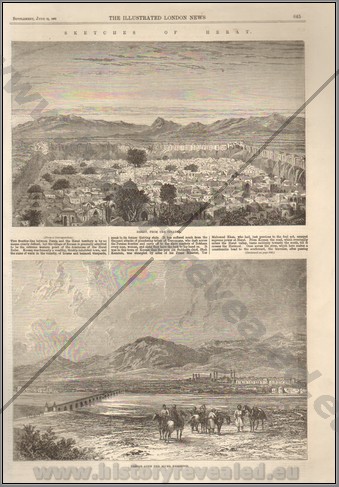 SAPE 059
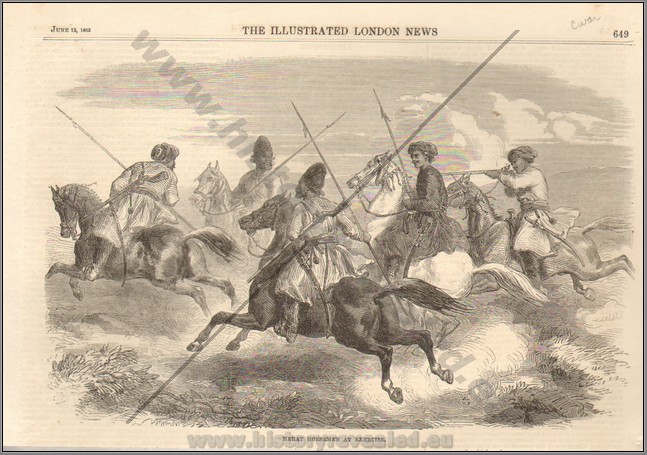 SAPE 059 In 1857 an addendum was signed to the 1855 treaty that permitted a British military mission to go to Kandahar (but not to Kabul) and to provide a subsidy during conflict with the Iranians. Fraser-Tytler notes that as Dost Mohammad signed the document, he proclaimed, “I have now made an alliance with the British government and come what may I will keep it till death”.
The British governor general of India at the time of the 1857 agreement with Afghanistan stated in a memorandum that the British would never again intervene in Afghan internal affairs or send an army across its borders unless Herat was besieged, and then only with Afghan consent. He went so far as to argue in favor of the Afghan absorption of Herat. In 1863 Dost Mohammad retook Herat with British acquiescence.