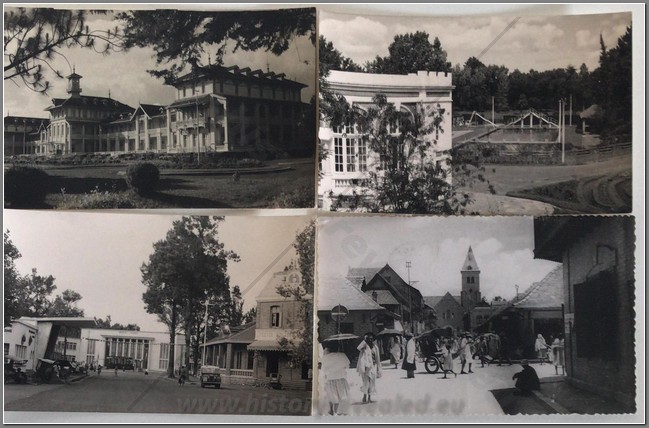
 MD 124
4 late colonial photo postcards of Antsirabe. SOLD
Price: $120.00

MD 124
4 late colonial photo postcards of Antsirabe. SOLD
Price: $120.00
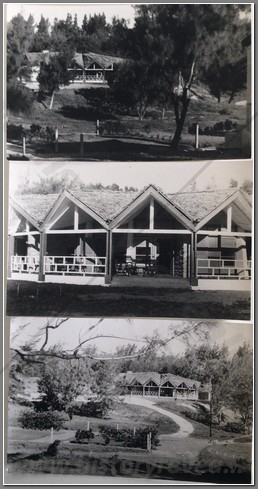 MD 123
3 late colonial photo postcards of Motel de Libanona, Fort-Dauphin. SOLD
Price: $90.00
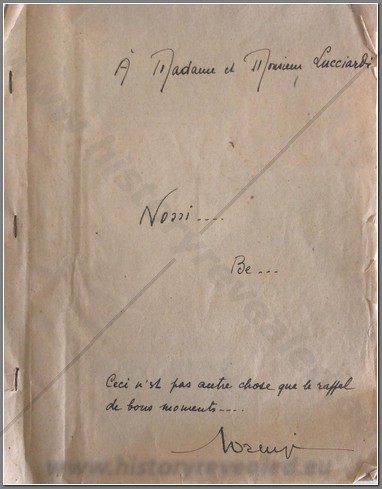 MD 122
Interesting photo scrapbook put together in August 1949 by one Francois Lorenzi, resident of Nosi-Be Madagascar in honor of his friend and author L.G. Lucciardi and his wife. 38 photos, with some artwork. What is interesting is the mock legal proceedings documented on the last three pages, where Lorenzi is found guilty and sentenced to buying his friends drink and his punishment if he fails to comply he will receive four blows on the nose. There is Lorenzi’s appeal, which is presided over by Lucciardi, and the results of the appeal. Well captioned. These men were lawyers making fun with each other.
Price: $500.00
Note: L.G. Lorenzi was a lawyer and in 1949 wrote Award given: solemn distribution of prizes, Lycée Gallieni at Antananarivo. In 1956 he wrote La justice en matière de droit local à Madagascar. He went on to become Avocat General at Abijan until 1958.
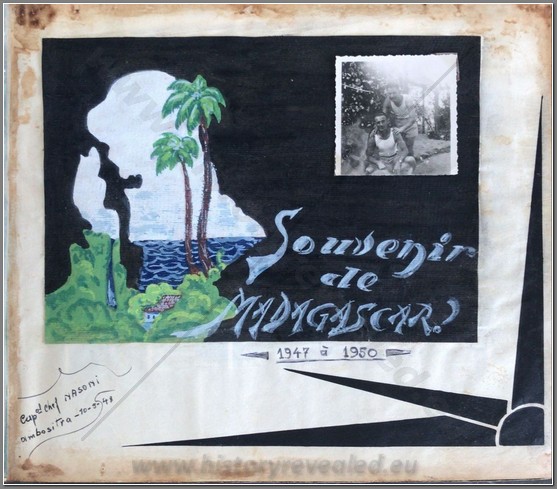 MD 121
 MD 121
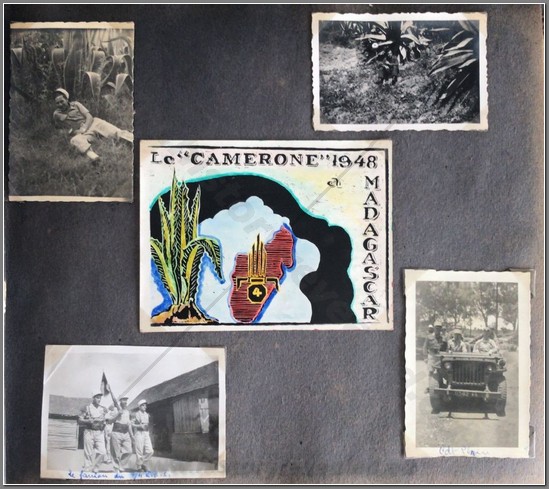
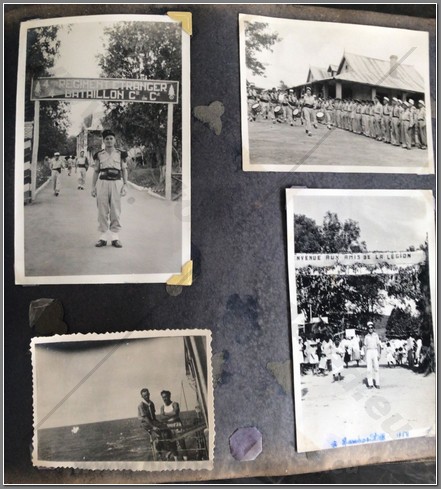
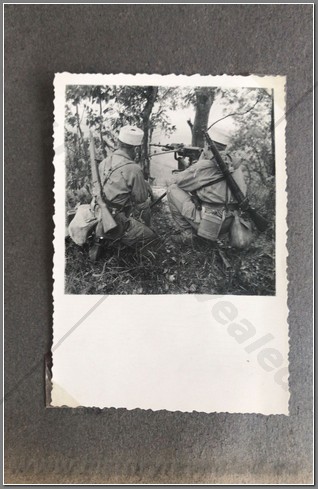
Photo album belonging to French Foreign Legionnaire Captain Nasoni while serving in Madagascar during the Malagasy Uprising, which lasted from March 1947 to February 1949. He was with the 4th Foreign Legion Demi-Brigade of Morocco (4e DBLEM). Shows troops disembarking at Ambisitra, military camp, Foreign Legion post at Antoetra, a military column in the wilderness, French soldiers parachuting into the military post at Ambofampana, fraternizing with local women, a visit to the island of Reunion, military parade through St. Denis, returning to Madagascar, cyclone damage, military post 332, entrance to the 4e DBLEM camp, in-camp recreation, local Betsileo, local tombs, local villages, albino child, local markets, Antanarivo, fighting in the jungle, armored convoy, parade at Ambositra, REBEL CHIEFS, Majunga, Diego Suarez, Nasoni with a Hova woman, returning home in 1941. Over 300 photos. Anything French Foreign Legion is rare and highly sought after. Similarly, anything on the Malagasy Uprising is rare. SOLD
Price: $2500.00
Note from Wikipedia:  MD 121
 MD 121The Malagasy Uprising was a Malagasy nationalist rebellion against French colonial rule in Madagascar, lasting from March 1947 to February 1949. Starting in late 1945, Madagascar's first French National Assembly deputies, Joseph Raseta, Joseph Ravoahangy and Jacques Rabemananjara of the Mouvement démocratique de la rénovation malgache (MDRM) political party, led an effort to achieve independence for Madagascar through legal channels. The failure of this initiative and the harsh response it drew from the Socialist Ramadier administration radicalized elements of the Malagasy population, including leaders of several militant nationalist secret societies. On the evening of 29 March 1947, coordinated surprise attacks were launched by Malagasy nationalists, armed mainly with spears, against military bases and French-owned plantations in the eastern part of the island concentrated around Moramanga and Manakara. The nationalist cause was rapidly adopted in the south and spread to the central highlands and the capital of Antananarivo by the following month, with the number of Malagasy nationalist fighters estimated at over one million. By May 1947, the French began to counter the nationalists. The French tripled the number of troops on the island to 18,000, primarily by transferring soldiers from French colonies elsewhere in Africa. The colonial authorities sought to fight on the physical and psychological fronts and engaged in a variety of terror tactics designed to demoralize the population. The French military force carried out mass execution, torture, war rape, torching of entire villages, collective punishment and other atrocities such as throwing live Malagasy prisoners out of airplanes (death flights).
  MD 121
 MD 121The estimated number of Malagasy casualties varies from a low of 11,000 to a high of over 100,000. The nationalists killed approximately 550 French nationals, as well as 1,900 Malagasy auxiliary men of the French army. By August 1948, the majority of the nationalist leaders were killed or captured, and the Uprising was effectively put down by December 1948, though the last armed resistance was only defeated in February 1949.
The violent repression of the nationalist insurgency left deep scars in Malagasy society. A generation of the managerial class was wiped out, creating challenges for the country when it achieved independence in 1960. Madagascar's first three deputies were arrested, tortured and kept in prison until they were given amnesty in 1958. Another leader who survived the conflict, Monja Jaona, was also jailed for nine years and then founded the Madagascar for the Malagasy Party (MONIMA), which has had considerable influence on Malagasy politics. France classified most documents related to the Uprising, and the French government maintained silence on the subject until French president Jacques Chirac termed it "unacceptable" during an official visit to Madagascar in 2005. Several Malagasy directors have set films in the period of the Uprising. In 1967, the Malagasy government declared 29 March an annual holiday, and in 2012, a museum dedicated to the Uprising was inaugurated in Moramanga
 MD 118
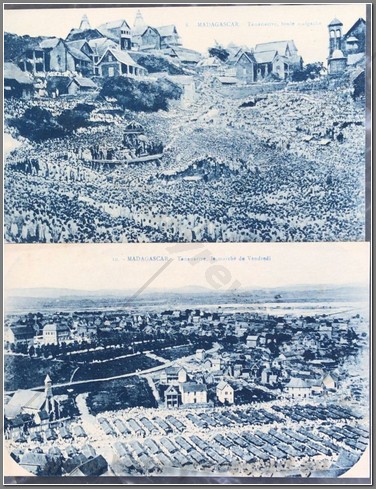
2 views of colonial Tananarive. SOLD
Price: $60.00
 MD 117
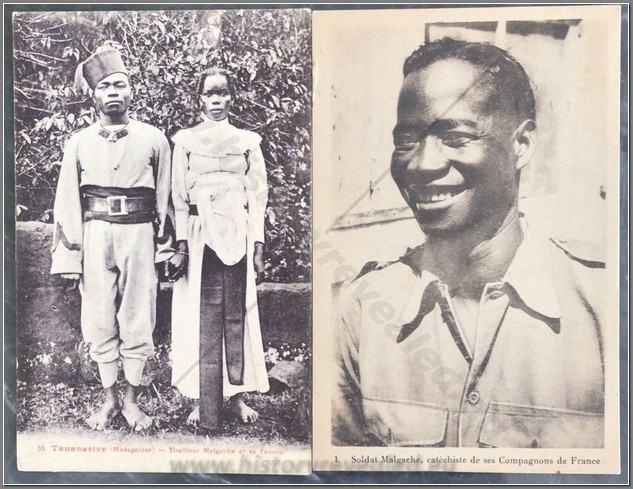
2 postcards of Madagagascar local military, one early colonial and the other early republic.
Price: $60.00
 MD 116
 MD 116
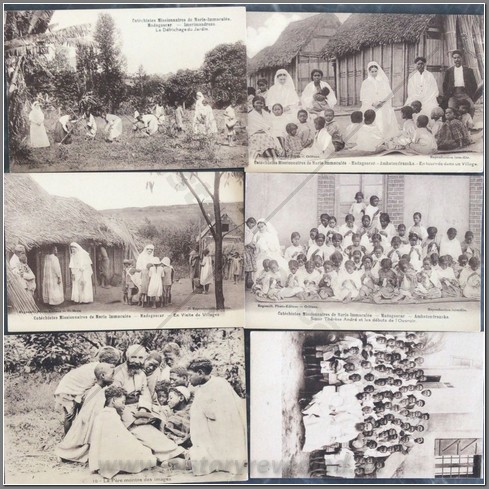
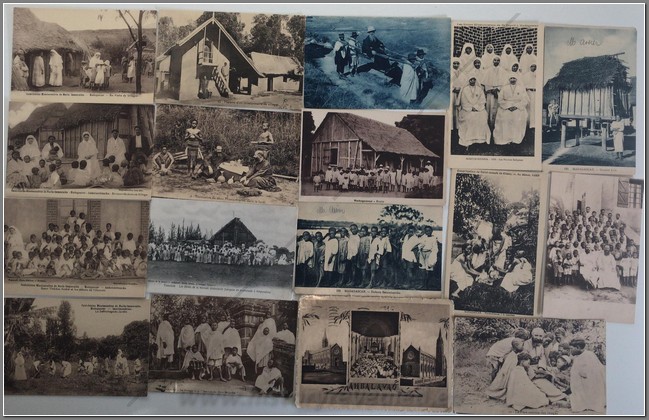
17 colonial postcards of missionary activity in Madagascar. EN SOLD
Price: $510.00
 MD 115
 MD 115
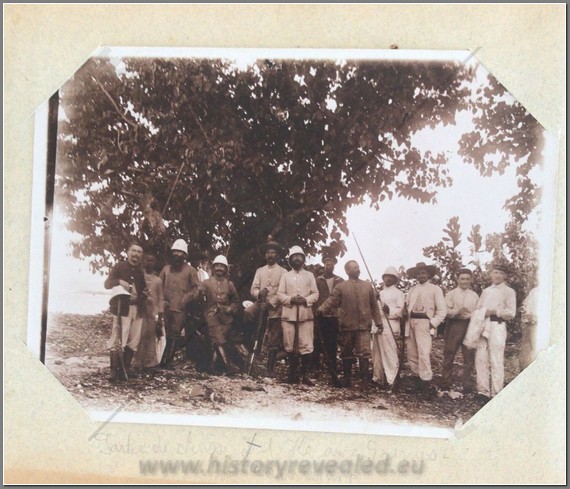
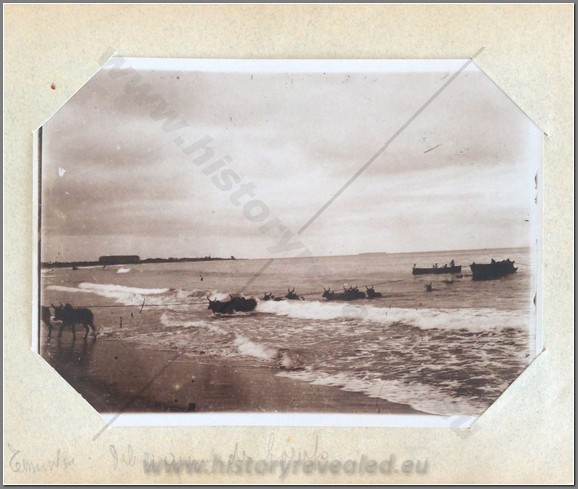
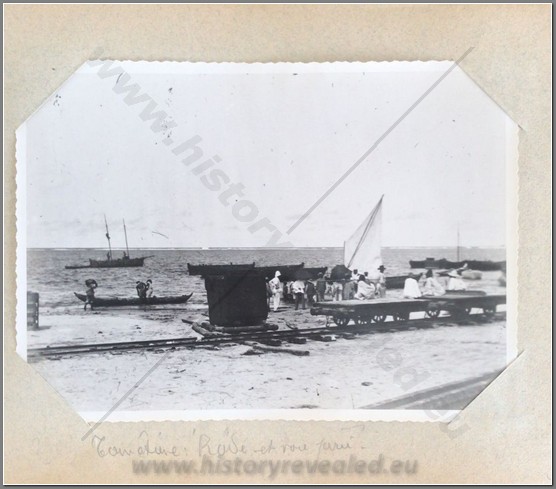
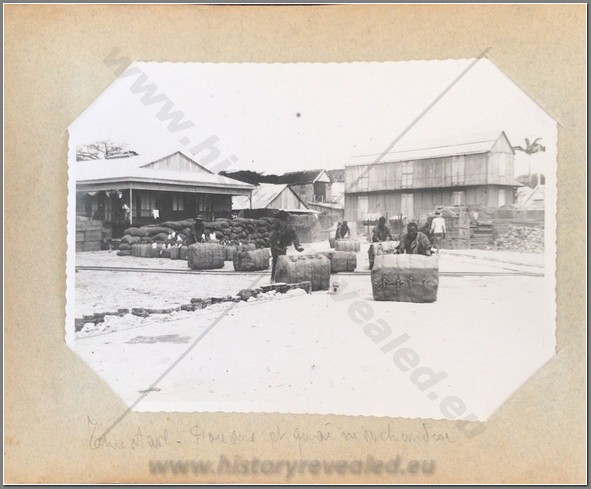
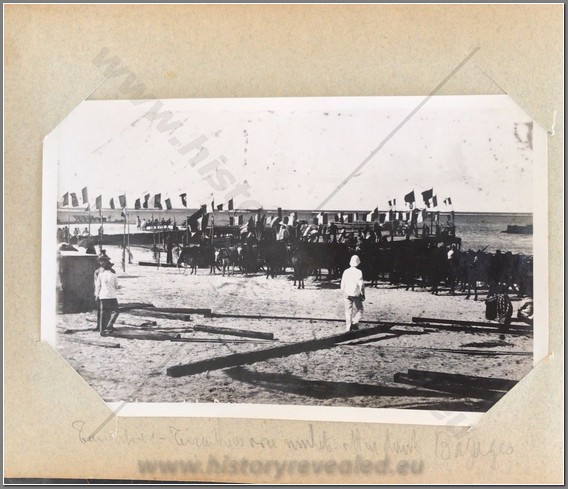
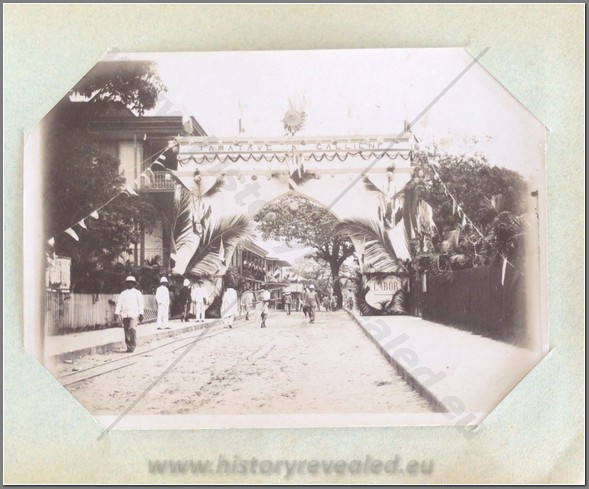
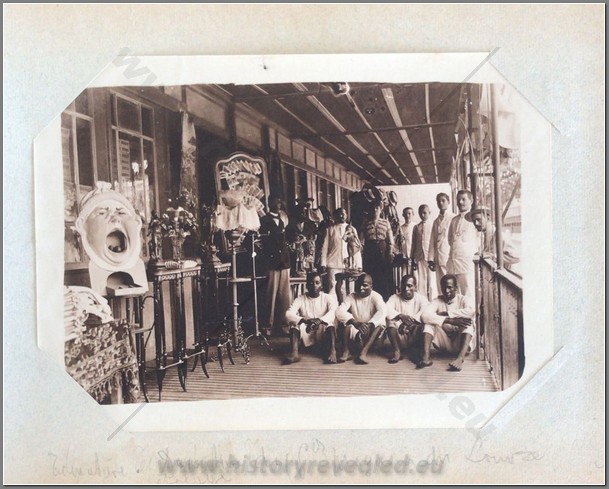
Photo album of colonial activity in Madagascar from 1899-1900, just 5 years after the French conquered the country. Shown are the construction of the first railroad at Tamatave, colonials in the bush, cattle hauling boats to shore, a regatta, July 14 celebrations, disembarking the first train locomotives, local village, Mission hospital, horse racing, colonial housing, local markets, General Pennequin disembarking, Malagache trailleurs, arrival of Governor General Gallieni, diplomats arriving by sea, local streets, new church, cemetery, local industry, preparation for Gallieni’s visit, fascinating photo of the opening of a French shop Grand Magazins du Louvre, wharf construction, tomb of an assassinated missionary, Customs House, Portuguese catholic ceremony involving local inhabitants, Governor Gallieni’s residence, colonial families and their servants, French hunters being carried by their servants, (interracial?) wedding ceremony, top colonial military/administrators enjoying wine, more. 111 photos, most captioned and dated. All from Tamatave. A rare album covering the period between the 1897 Menalamba Rebellion against French rule and the 1904 uprising. Both Gallieni and Pennequin arrived in Madagascar in 1897, so this album dates from their first visit, together, to Tamatave. A rare album from a critical period showing early colonial efforts at building an infrastructure. SOLD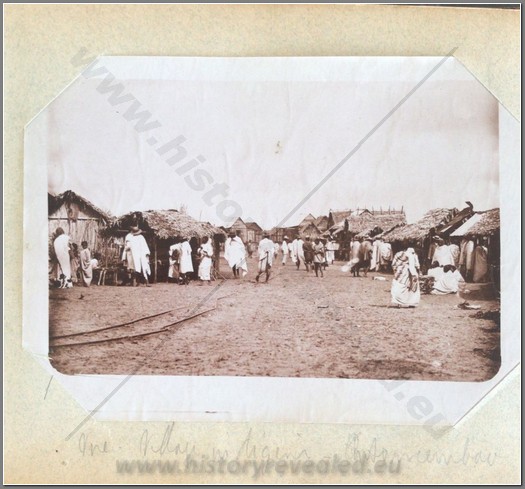 MD 115
 MD 115
Price: $3500.00
Note from Wikipedia: General Joseph Gallieni (1849-1916) was sent to Madagascar in 1896 as resident general. Abandoning the diplomatic approach of his predecessor, General M. Laroche, he preferred strong methods to stem the rise of anti-colonial resistance. He established forced labor for the natives by imposing 50 days of corvée per adult. The royal court, a center of resistance against France, was placed under surveillance. He immediately had Prince Ratsimamanga and Rainandriamampandry , Minister of the Interior, arrested and brought before the War Council for rebellion and “fahavalism”. At the end of a parody trial, they were sentenced to death and executed as an example, wishing to make "a strong impression on the natives". One of the members of the War Council subsequently confirmed that the two accused had been “condemned on the orders” of Gallieni. The latter destroyed the minutes of the hearing rather than transmitting them to the military archives.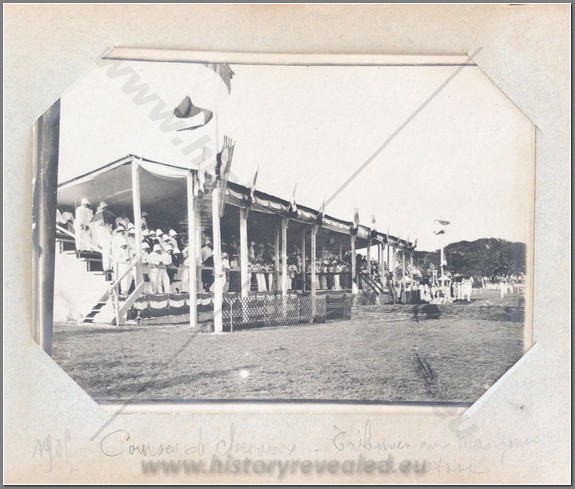 MD 115
 MD 115
Queen Ranavalona III was accused of plotting against French influence, and was deposed on February 27, 1897and exiled to Reunion Island, thus putting an end to the Malagasy monarchy and the Merina dynasty . In eight years of proconsulate, Gallieni pacified the island, proceeding with its colonization. The establishment of forced labor and the massive summary executions which characterized the repression he carried out against Malagasy resistance to colonization caused many deaths. He abolished slavery in Madagascar in 1896, leading to the freeing of more than 500,000 slaves across the country .
According to General Gallieni, military action had to be accompanied by aid to colonized peoples in different areas such as administration, economy and education. 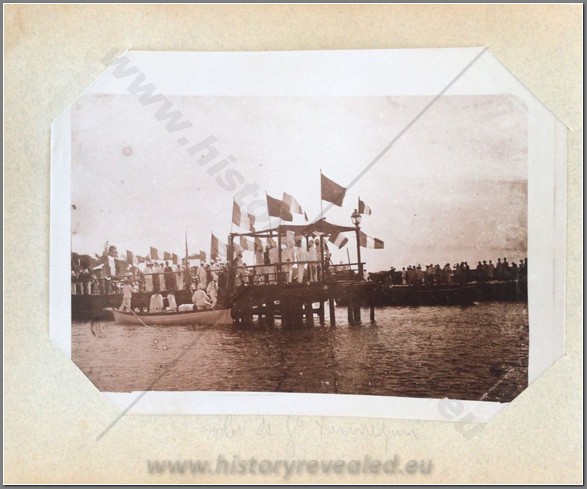 MD 115
 MD 115It required permanent contact with the inhabitants as well as a perfect knowledge of the country and its languages. Under the leadership of Gallieni, numerous infrastructures were put in place: the railway from Tamatave to Tananarive, the Pasteur Institute, secular schools providing education in French.
The general enforced the policy known as racial politics, which consisted of the recognition of the identity of each ethnic group and the end of their subordination to another ethnic group. This above all to put an end to centuries-old Merina domination, the Merinas being the most hostile to French domination. Relying on the writings of anthropologists and travelers of the 19th century and after a systematic census of the population using photography, he attempted to divide administrative districts by following this cartography of races.
Note from Wikipedia: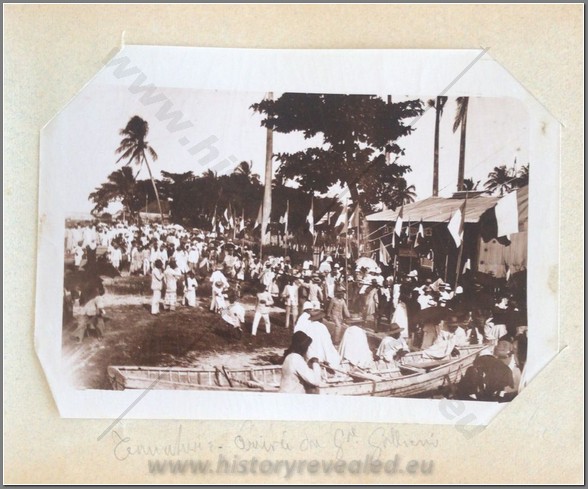 MD 115
 MD 115Théophile Daniel Noël Pennequin ( 1849 – 1916 ) was a French general and colonial administrator. In 1883 he was charged with creating a company of mixed riflemen, Comorians, Zanzibari and Sakalaves who would take the name “black helmets”. This unit fought against the Hova Army during the First Franco-Malagasy War . His activity earned him the Knight's Cross of the Legion of Honor . Once again he was opposed to the Merina army commanded by the British Colonel Shervington during the battle of Andampy where he defeated them on August 27, 1885, which earned him promotion to officer of the Legion of Honor . He acquired great fame for these actions but also for his non-conformism. Following a tour in Indochina, he was named general before returning to Madagascar with his colleague Gallieni in April 1898. In sixteen months of superior command of the troops in Madagascar, and by ensuring the interim of Gallieni as governor-general, he subdued the Sakalave rebellions and in particular received in Tananarive the surrender of Queen Binao and two other Sakalave sovereigns.
 MD 115 MD 115 |  MD 115 MD 115 | 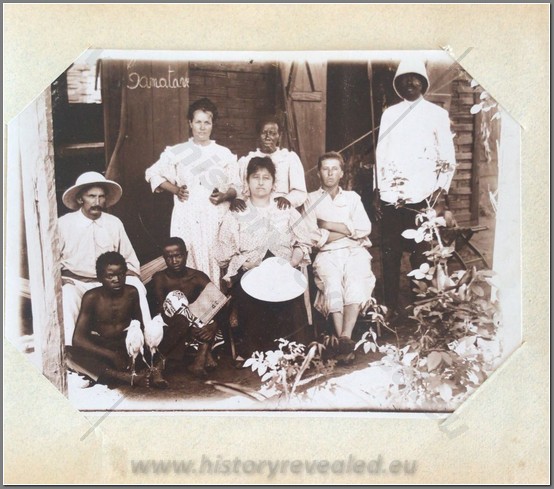 MD 115 MD 115 |
 MD 112
9 photos taken by a French soldier posted in Ambohimrina, Madagascar from 1905-1907. Shown are the arrival of intermediate Governor General Dagneaux, trailleurs camp, a view of the post which was 3-4 km from the sea, showing where the photographer lived, construction of the trailleurs lodgings, distribution of food to the trailleurs. Legibly captured on both front and back. Original owners envelope included.
Price: $300.00
 MD 110
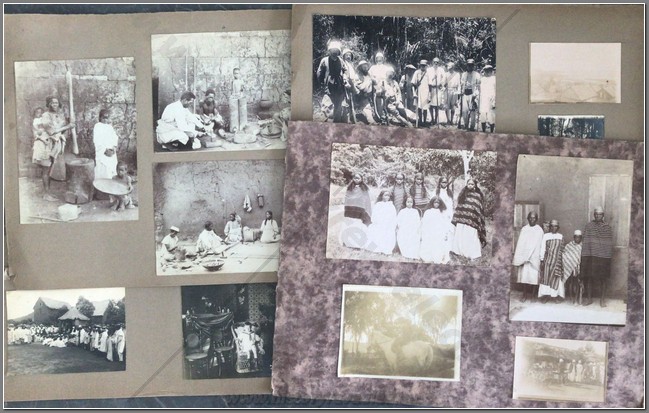
33 mounted photos of Madagascar done shortly after its conquest by France. Good mix of ethnographic and colonial images. Shot in Tulear and Antanarivo.
Price: $500.00