 MD 071
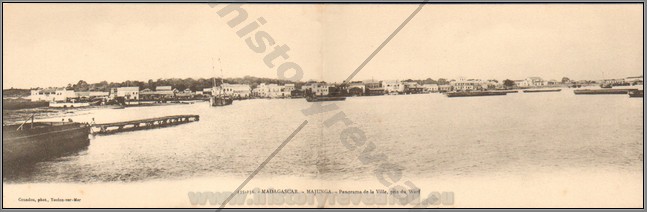
Double postcard size panorama of Majunga in 1906. B EH.
Price: $80.00

MD 071
Double postcard size panorama of Majunga in 1906. B EH.
Price: $80.00
 MD 058
 MD 058
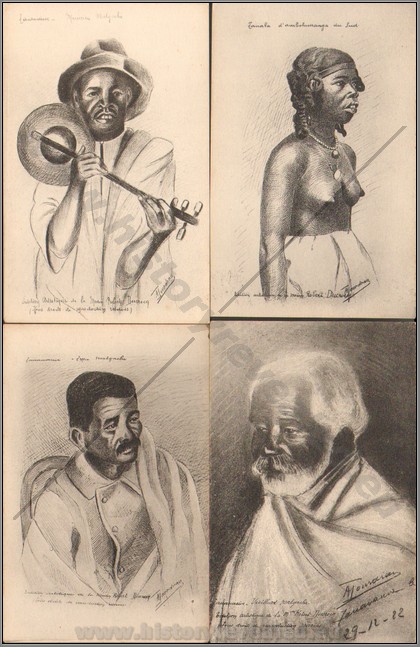
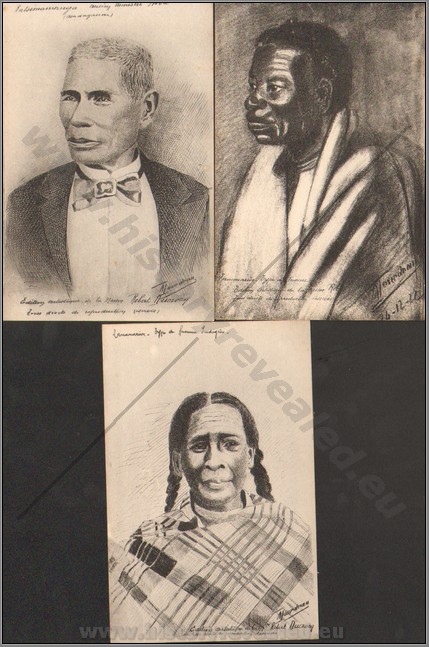
7 fantasy postcards of Madagascar types and personalities. SOLD
Price: $250.00
 MD 051
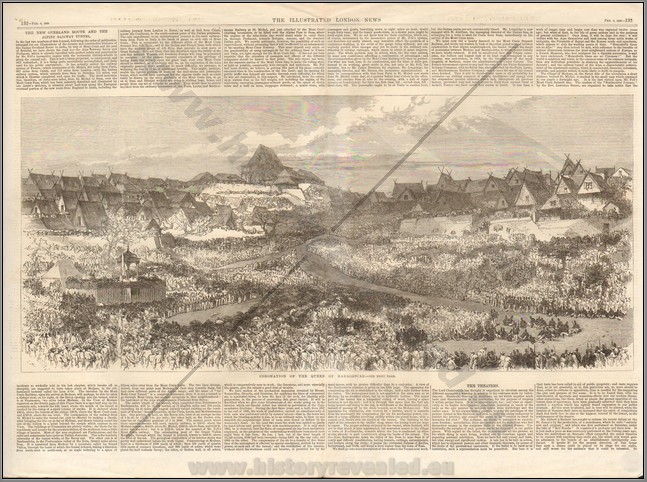
1869 fold out illustration from the London Illustrated News on the coronation of the queen of Madagascar. Size: 27 x 40cm. EH BBB
Price: $90.00
 MD 039
  MD 039
  MD 039
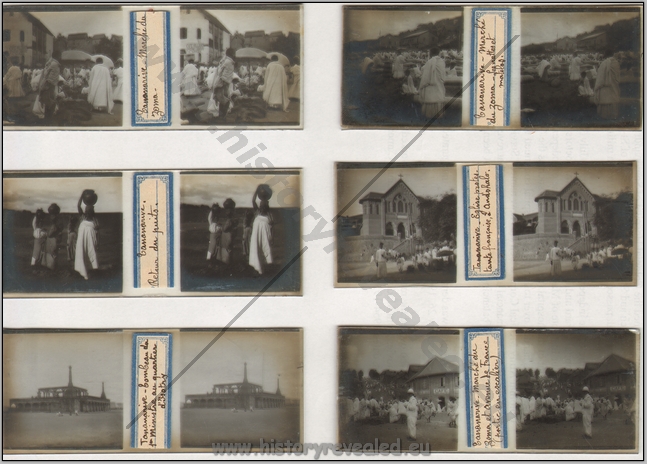
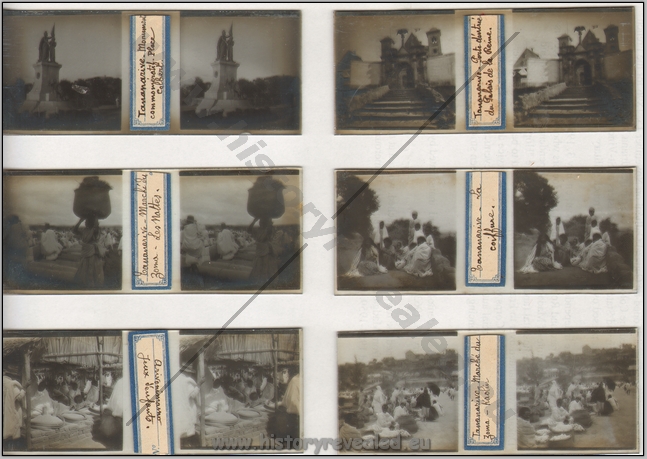
Homogeneous collection of 25 glass slides of Tananarive, Madagascar, taken in 1900…..just a few years after the country came under French rule. Images include a rice plantation, Zoma market in Tananarive, coiffure maintenance, entrance to the Queens palace, monument at Place Colbert, locals in front of English protestant church, tomb of the First Minister, locals returning from well, palace of the First Minister, motherhood, panoramas of Tananarive, local fishing techniques, fascinating image of the door of entry to a village, local home inside Tananarive, local laundry washing, local hut, and more. All slides contain descriptions and are in very good condition except one. If interested there are slides from Cote d’Ivore and Indochina available from the same owner. SOLD
Price: $400.00
 MD 038Collection of 8 super 8 home movies sent to Dr. Porte who worked at the Hopital Girard et Robic, in Tanarive, Madagascar. The movies date 1954-1959 and cover footage in Madagascar, Cameroun, Tanzania, Comoros Islands, Algeria and Ajaccio. The movies in Madagascar no doubt show the hospital shortly after independence and shortly before it was demolished. I am not able to explore the footage because I do not have an 8mm film projector. Each reel is in its own separate box. B
Price: $500.00
Note: The hospital of Soavinandriana (meaning “blessed sovereigns”) was inaugurated on August 13, 1891 by Queen Ranavalona III and her Prime Minister, Rainilaiarivony. When Antananarivo fell to General Duschesne on September 30, 1895, during the Third Madagascar War, the hospital was accidentally shelled while 80 Malagasy and French soldiers were convalescing there.
The hospital was requisitioned by General Galliéni on November 15, 1896 for the French Army and was renamed the Colonial Hospital of Soavinandriana. After passage of the law separating Church and State in 1904, the 10 sisters of St-Vincent of Paul who managed the hospital, passed over control to the French military. The day before of the independence of Madagascar, on July 3, 1957, the hospital was renamed Hopital Girard and Robic, in honour of two doctors who were former directors of the Pasteur Institute of Madagascar. At the time of independence, supervision and management of the hospital (and other hospitals such as the "Hôpital Principal de Dakar") was handed over to France. The hospital continued to be run by the former Colonial Army Medical Corps which was now named "Service de Santé des Troupes de Marine" with "full financial autonomy". This meant that revenues had to pay for all expenses but budget balancing and profitability had not been strictly enforced previously. In 1958 the hospital was demolished, rebuilt and inaugurated by President Philibert Tsiranana on February 26, 1963.
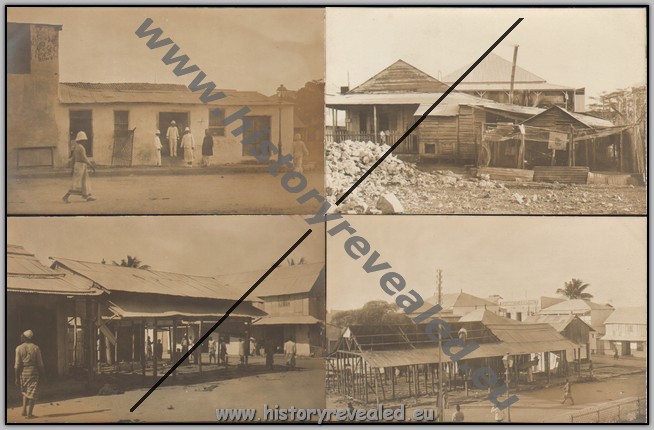 MD 008 MD 008 | Collection of 14 unique photographs (on postcard stock) on Diego Suarez, 1912. Shown are the cyclone damage, specific buildings mentioned by name, etc. m Price: $280.00 | 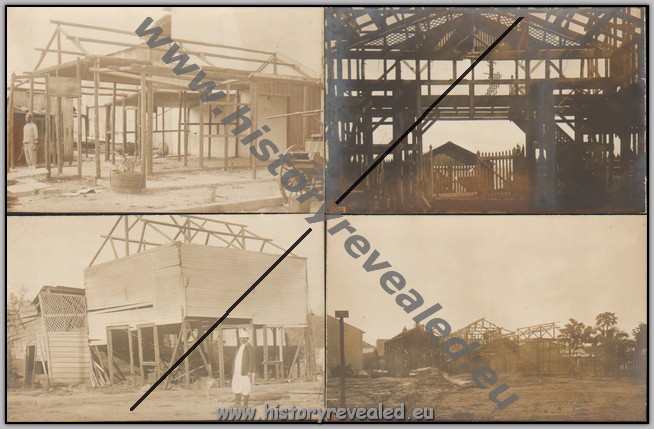 MD 008 MD 008 |
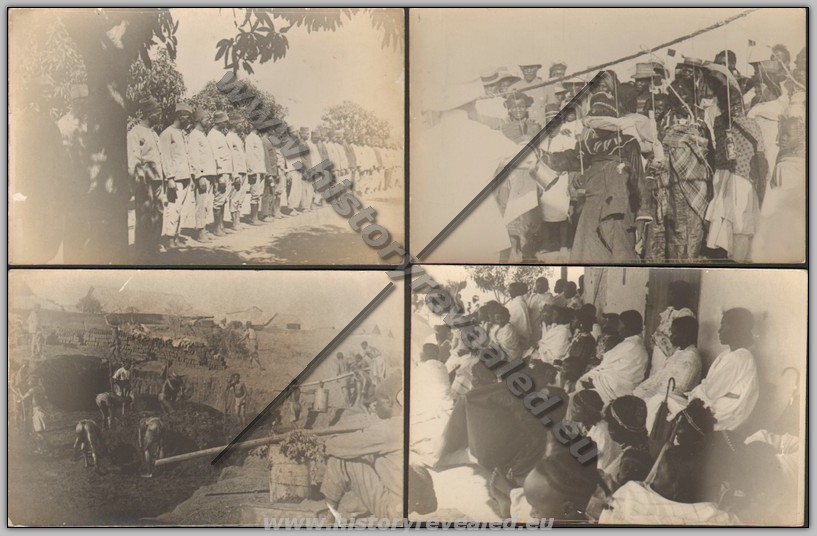 MD 006 MD 006 | Collection of 7 vintage photos on postcard stock of life in Madagascar. No descriptions or dating but clearly late 19th or very early 20th century. Rare photos of brick making, new local military, local festivity with french colonials, village life, etc. SOLD Price: $200.00 | 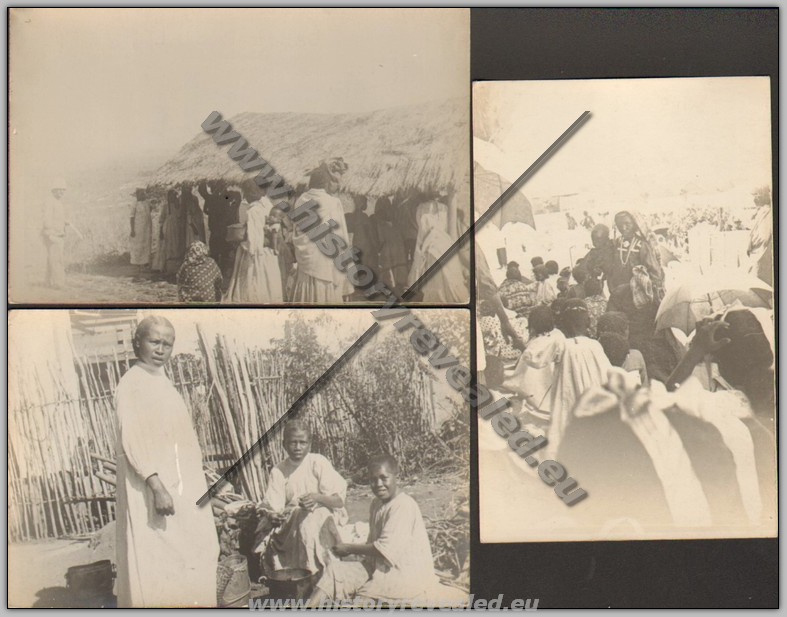 MD 006 MD 006 |
 FA 027
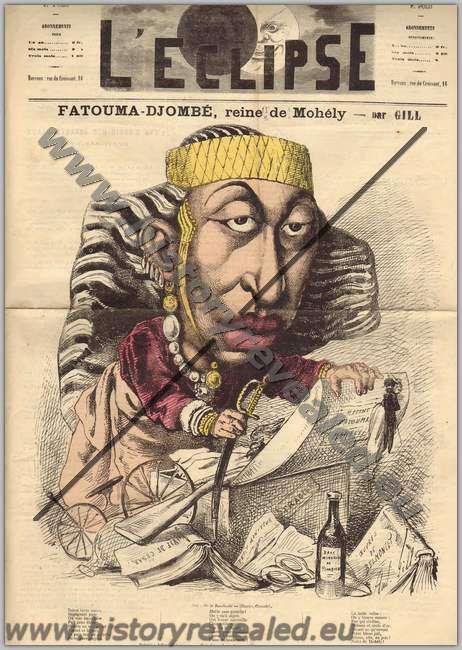
Complete issue of L'Eclipse, dated Jul 26, 1868. It shows a cartoon of Fatouma-Djombe, queen of Mohely, which is one of the four islands in the Comoro Archipelago. eh ah M
Price: $90.00
 FA 019
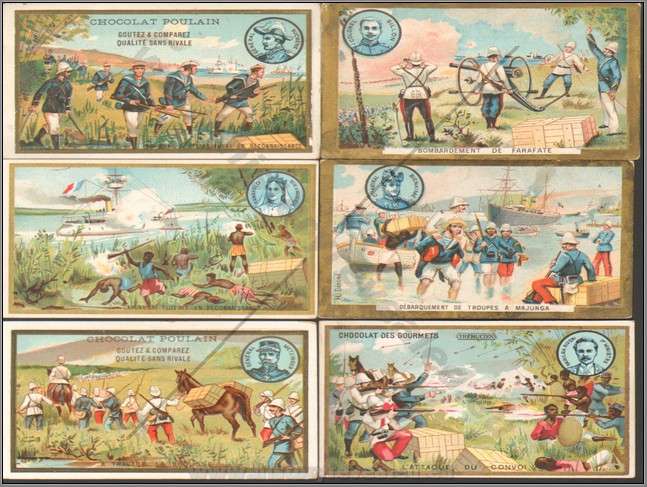
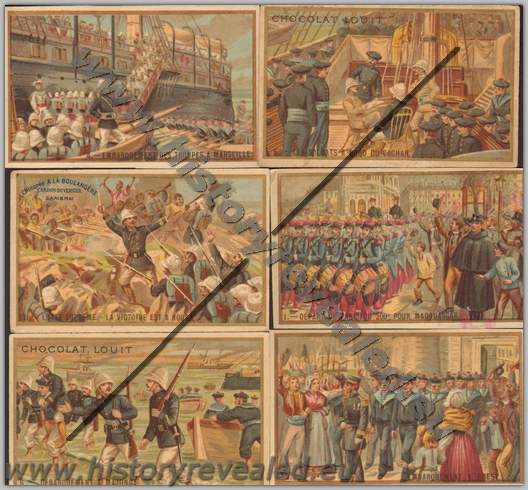
Complete set of 6 cards from different French confectioners on the war in Madagascar, done over 100 years ago. All with advertising on back. MBB ah eh kh
Price: $180.00
 FA 018
 FA 018
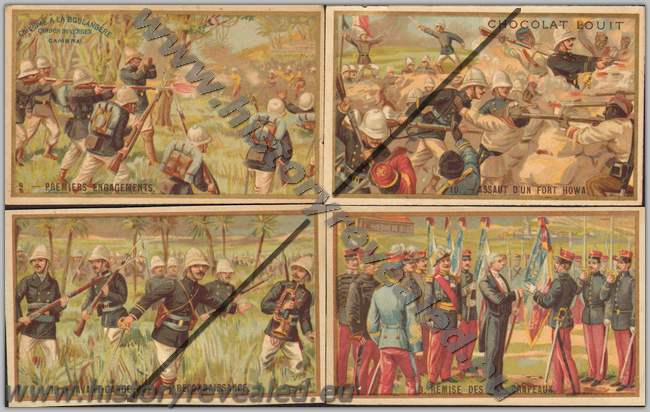
A collection of 10 early twentieth century trade cards on the war in Madagascar by a number of different french food and drink producers. B eakh
Price: $300.00