 SCW 346
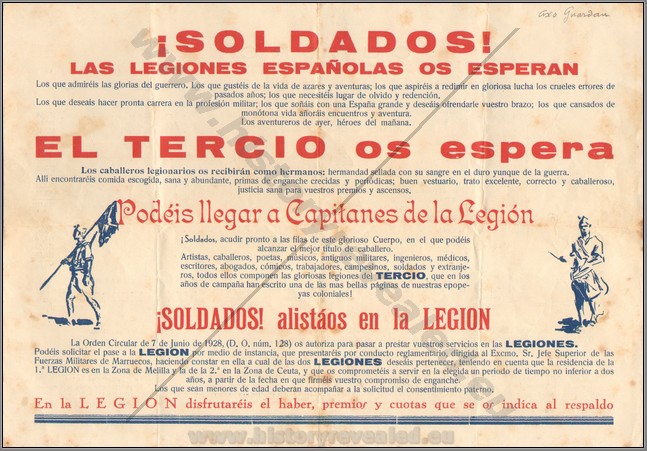
1928 broadside calling up soldiers for the Spanish Legion. Size 31x22cm. M
Price: $280.00

SCW 346
1928 broadside calling up soldiers for the Spanish Legion. Size 31x22cm. M
Price: $280.00
 SCW 341
 SCW 341
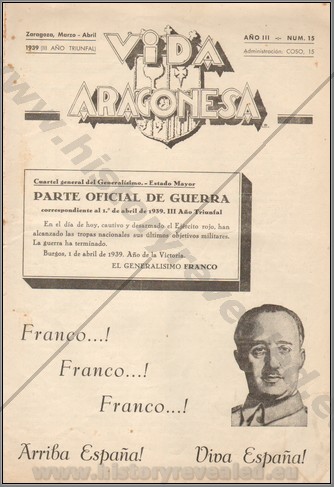
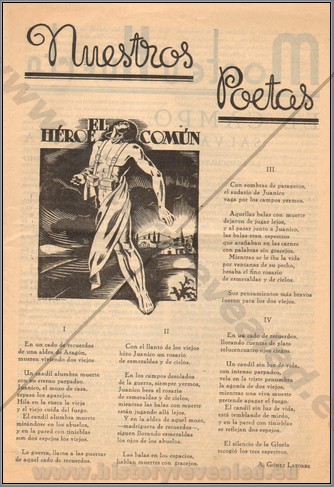
April 1939 issue of Vida Aragonesa, No: 15. Rare. No American library holds this title
Price: $110.00
 SCW 340
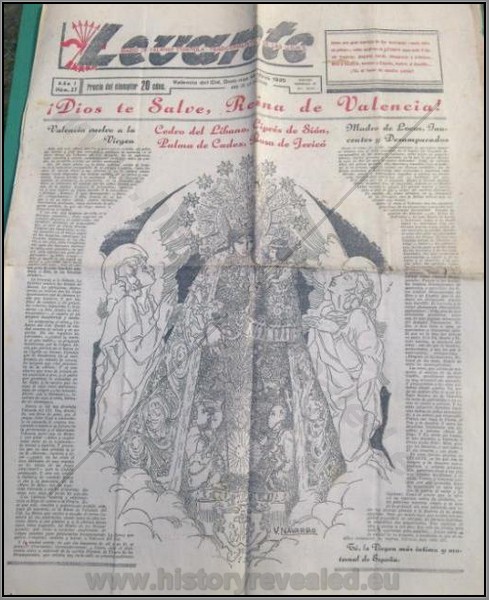
Levante: Órgano de Falange Española Tradicionalista y de las J.O.N.S. Valencia, May 1939. Año I, no. 27. An exceptionally early issue of Levante, the newly established Falangist daily of Valencia, published only weeks after the end of the Spanish Civil War and the occupation of the city by Francoist forces. Created from the facilities of the suppressed Republican newspaper El Mercantil Valenciano, Levante became an important instrument of the new regime's political and cultural authority in Valencia. This issue presents a particularly striking example of the construction of National-Catholic identity in the immediate aftermath of Franco's victory. Its illustrated front page, headed “¡Dios te Salve, Reina de Valencia!”, is dominated by an image of the Virgen de los Desamparados, patroness of Valencia, while the Falangist yoke-and-arrows emblem is incorporated directly into the newspaper's masthead. The juxtaposition vividly demonstrates the fusion of Falangism, Catholic devotion, regional identity, and mass communication during the formative weeks of the Franco dictatorship. No American library holds this title
No American university holds this issue
Price: $110.00
 SCW 339
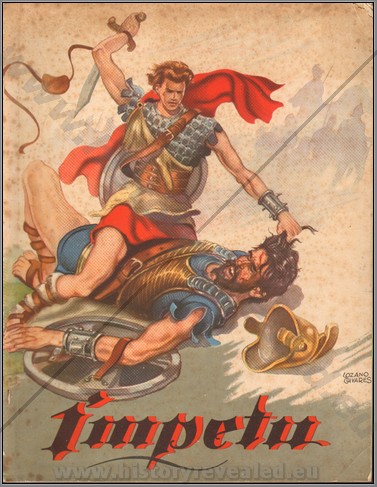
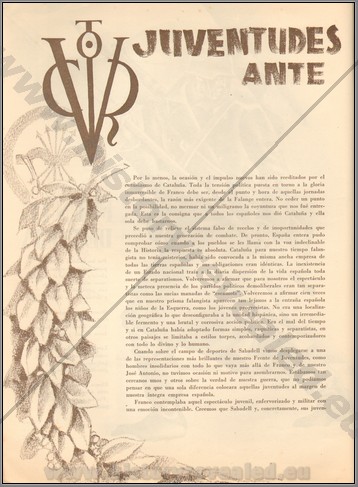
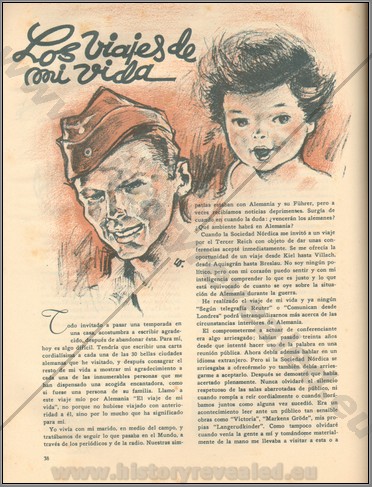
SCW339. IMPETU. Revista de los Cadetes del Frente de Juventudes. Barcelona: Delegación Provincial del Frente de Juventudes, 1942. Nos. 2, 3 and 4. Three consecutive issues from the scarce, short-lived second series. Illustrated throughout.
A scarce consecutive group of three issues of Ímpetu, an illustrated Falangist youth magazine published by the Barcelona Provincial Delegation of the Frente de Juventudes, the Franco regime's principal organization for the political and social formation of Spanish youth. The second series appears to have been particularly short-lived, beginning with No. 1 in November 1941 and apparently ceasing during 1942. Combining dramatic illustration, stories, history, military subjects, political rhetoric and contemporary events, Ímpetu provides unusually vivid evidence of the visual and ideological education of young people during the formative years of the Franco dictatorship. Its contents promoted an ideal of Spanish youth founded upon discipline, masculinity, military virtue, Catholicism, sacrifice and loyalty to Falange and Franco. Contemporary references to the Blue Division further locate the publication within the international context of the Second World War and the regime's militant anti-Communism. No American library holds this title.
Price: $500.00
 SCW 339 | 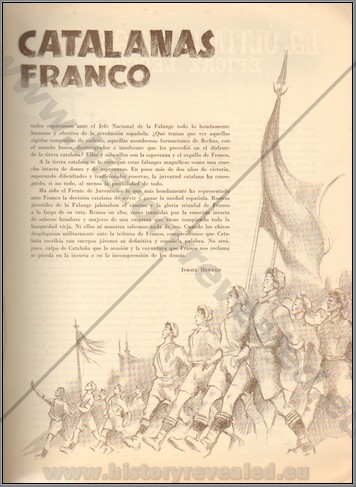 SCW 339 | 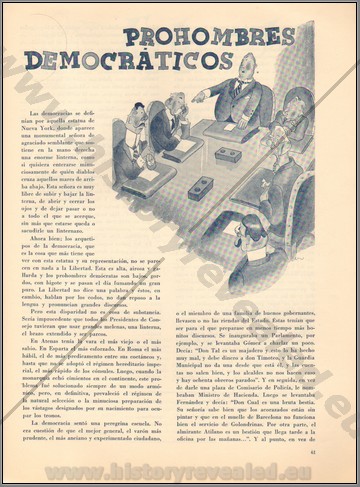 SCW 339 | 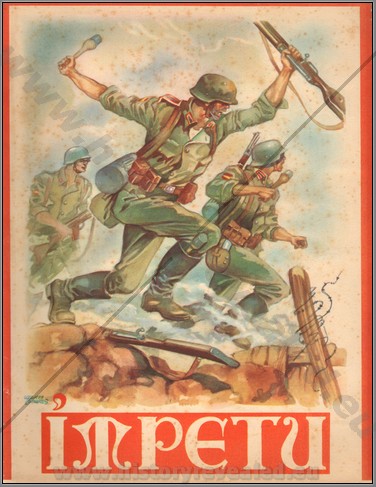 SCW 339 |
 SCW 339 | 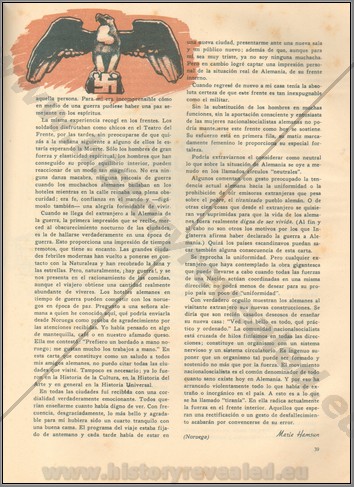 SCW 339 | 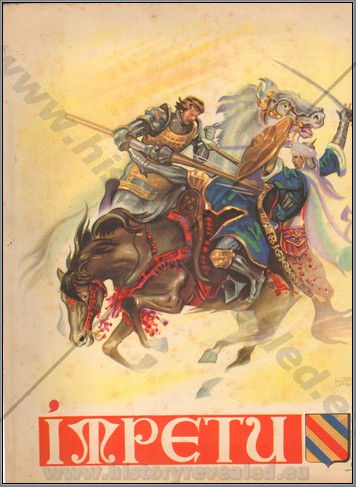 SCW 339 |  SCW 339 |
 SCW 337
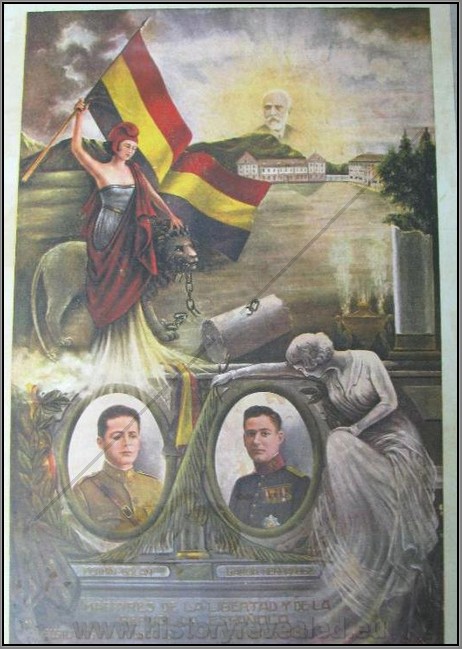
Spanish Republic poster of the two martyrs, Galan and Hernandez. Original painting by Escolá. Allegorical Spain is shown with the tricolor flag and resting on a lion, with Pablo Iglesias observing. At the bottom are the images of Fermin Galan and Garcia Hernandez. The inscription below reads "MARTYRS OF FREEDOM AND THE SPANISH REPUBLIC, EXECUTED IN HUESCA DECEMBER 14TH 1930 ". The poster has been pasted onto a rigid board for better preservation. Size: 27 x 39cm. M
Price: $390.00
 SCW 327
 SCW 327
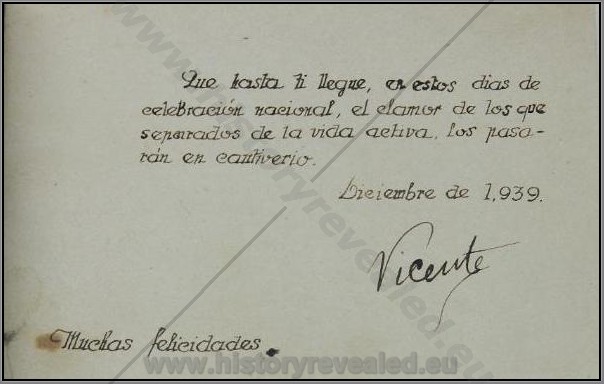
1939 original hand painted card by a prisoner in a civil war prison Aviles, Asturias. Signed by Gomez. Size: 8,6 x 14cm. M
Price: $180.00
 SCW 323
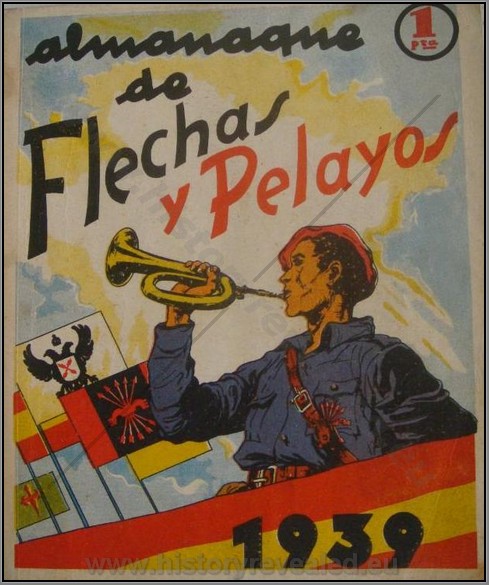
1939 Almanaque, Flechas and Pelayos. M
Price: $190.00
 SCW 313
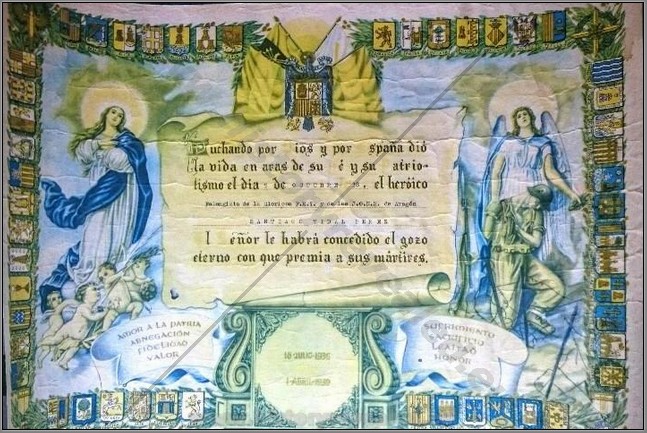
Diploma for a fallen soldier in Aragon. Size: 33 x 48cm. M
Price: $500.00
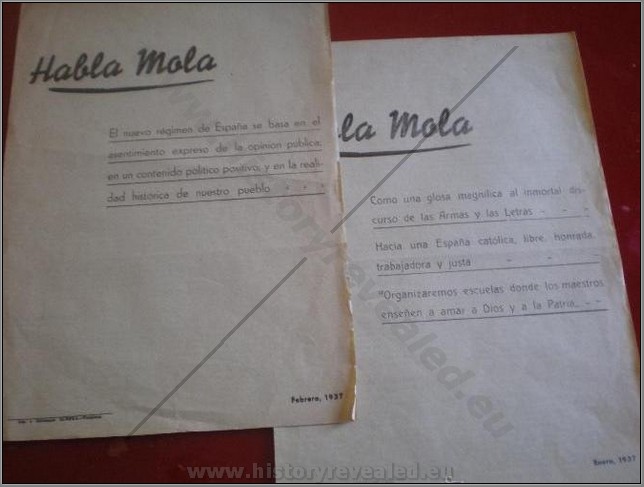 SCW 311
Two speeches by General Mola. M
Price: $120.00
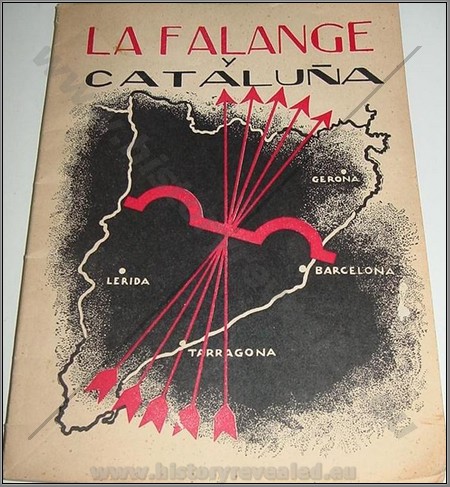 SCW 306
The Falange and Catalonia. 95 pages. Size: 15 x 21cm. AN ASK FOR AVAILABILITY
Price: $90.00
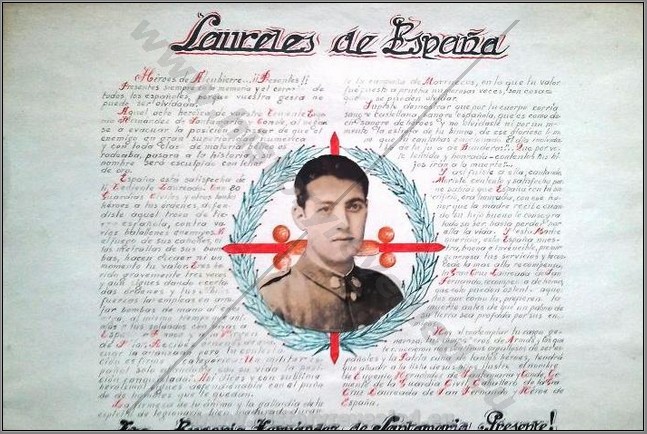 SCW 304
Civil war handwritten sheet commemorating the death of Civil Guard Lieutenant d. Eugenio Hernandez, a nationalist, who died at the battle of Alcubierre. Size: 24 x 33cm. M
Price: $490.00
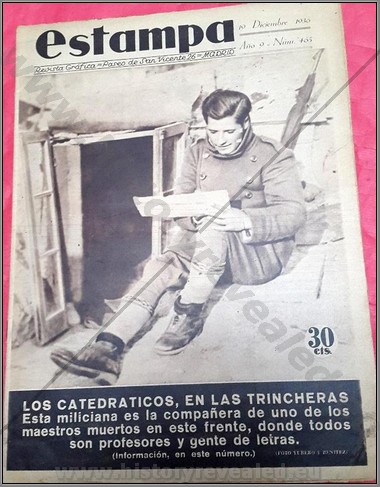 SCW 303
 SCW 303
 SCW 303
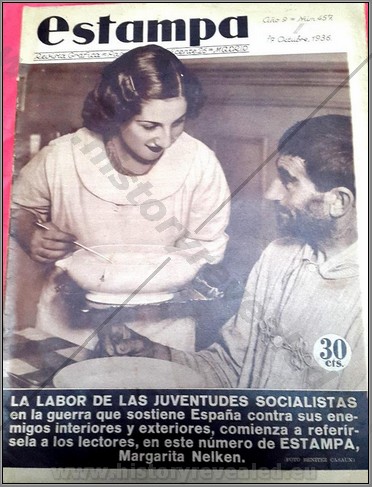
September - December, 1936 issues of Estampa. Number: 454, 457, 465. AN
Price: $270.00
 SCW 302
 SCW 302
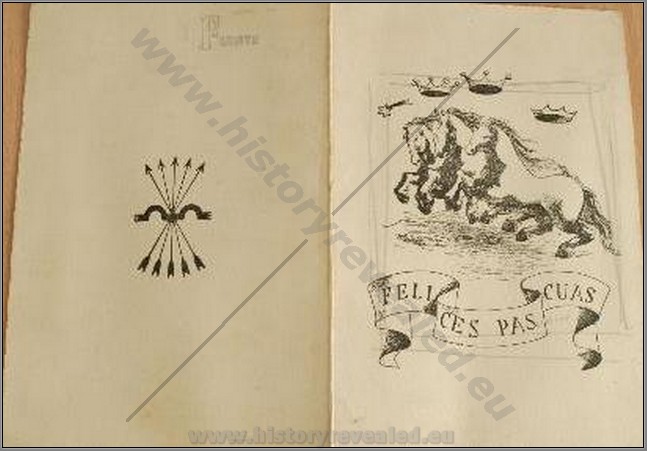
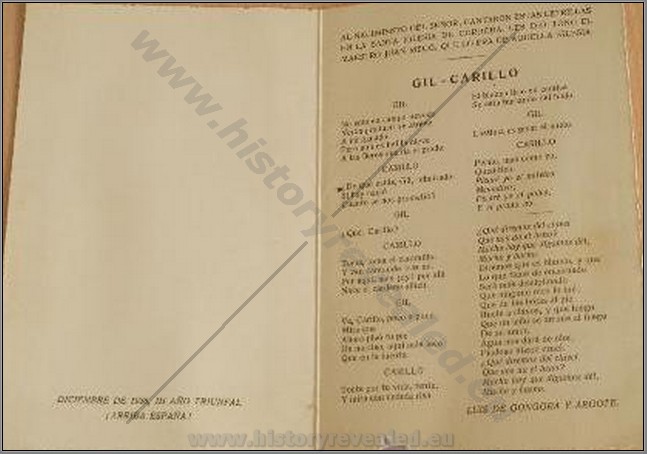
December 1938, Christmas greeting. M
Price: $70.00
 SCW 293
 SCW 293
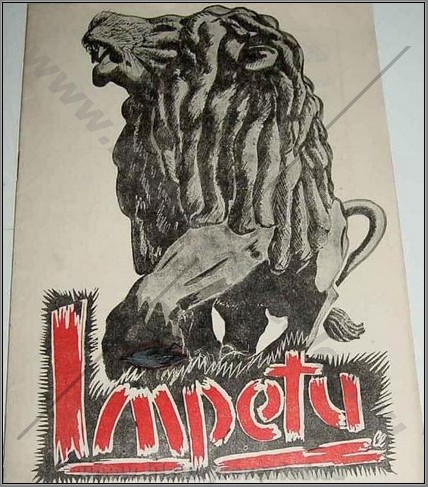
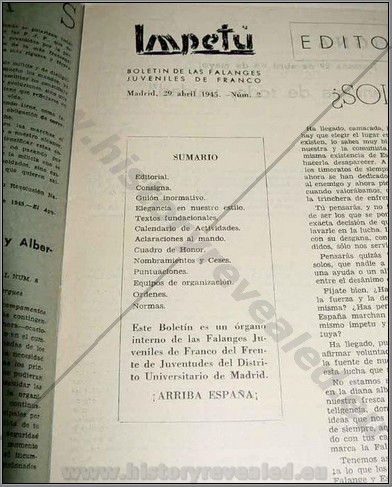
Two striking issues of Ímpetu, the illustrated periodical produced by the Barcelona organization of the Frente de Juventudes, the Franco regime's principal institution for the political formation and mobilization of Spanish youth. Published in 1945, issues #2 and 3 combine popular graphic culture with the ideological vocabulary of Francoism, presenting young readers with narratives and imagery centered upon heroism, discipline, masculinity, sacrifice, nationalism, military values and anti-Communism. Published in 1945, at the moment of the collapse of Nazi Germany and Fascist Italy, these issues are particularly valuable for studying Spanish Falangism at a moment of profound international transition. Franco's regime survived the destruction of its former Axis sympathizers and increasingly sought to reposition itself in the emerging postwar order, while Falangist institutions continued their efforts to shape Spanish youth.
Together, the two issues provide evidence not merely of official Francoist doctrine, but of how that doctrine was packaged, illustrated and made culturally attractive to a generation being raised under the dictatorship. Given the date of 1945 these magazines answer the question of what happens to a fascist youth culture when the European regimes to which it had been ideologically closest have just been defeated? No American library holds this title.
Price: $220.00
 SCW 290
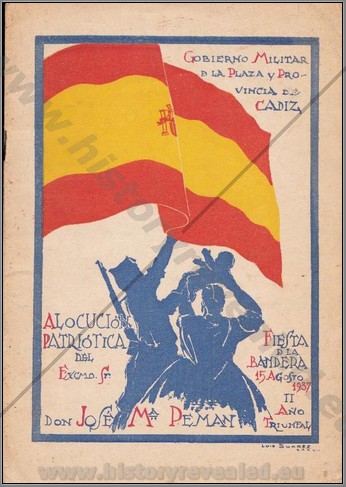
Patriotic brochure, August 1937, II Triumphan by Josep M. Peman. No American library holds this.
Price: $120.00
 SCW 288
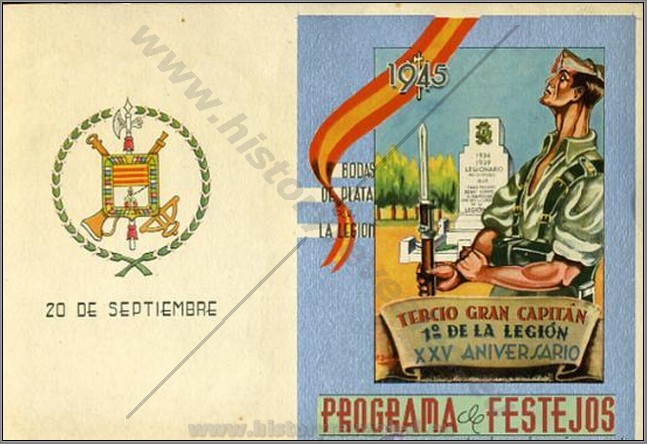
1945 Cardboard poster program celebration, legion, 25th anniversary. Size: 22 x 32cm. m
Price: $120.00
 SCW 287
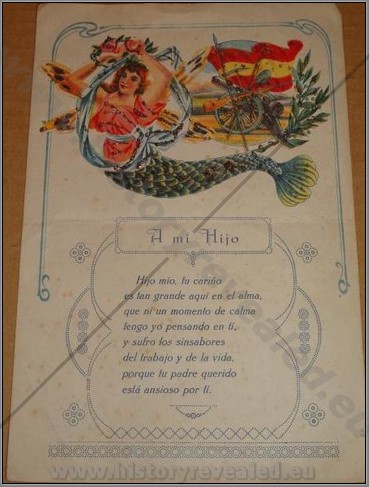
Civil war period "Letter to my son", Military. Size: 13 x 20cm. It reads " My son, your love is so great here in my soul, that I don't have a moment of calm without thinking of you, and I suffer the hardships of work and life because your dear father is anxious for you".
Price: $90.00
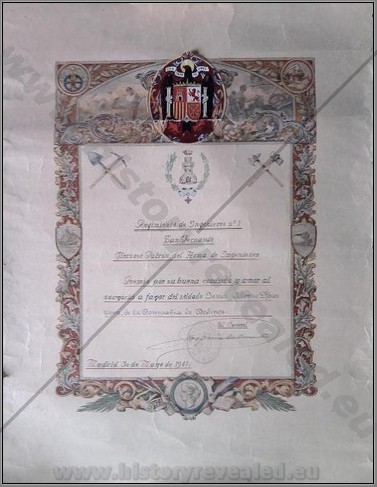 SCW 285
1941 Engineering diploma for a soldier. M
Price: $180.00
 SCW 284
1945 Poster, Delegation from National Rural Youth. Size: 50 x 70 cm. M
Price: $490.00
 SCW 282
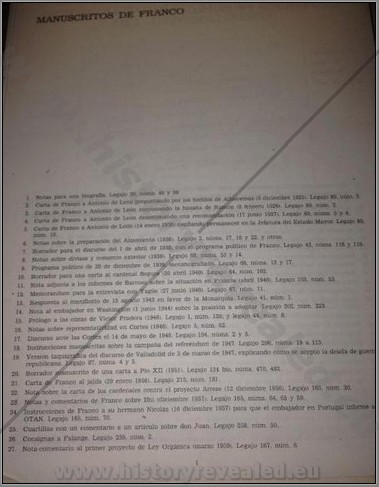 SCW 282
Manuscripts de Franco. 320 pages. M
Price: $290.00