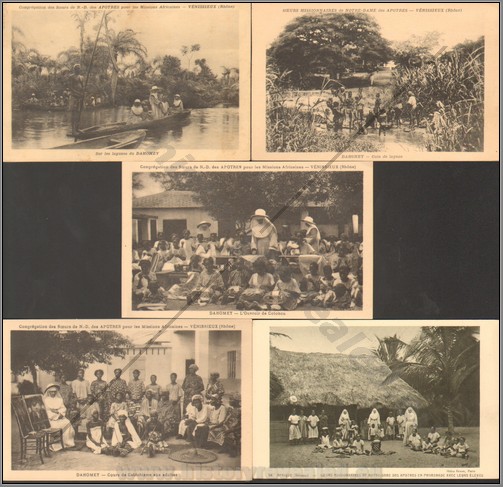
 FA 144
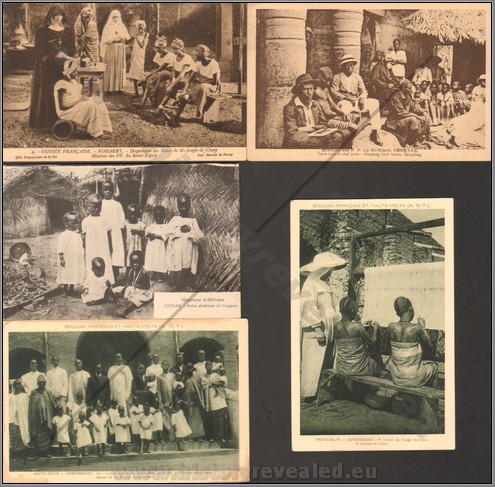 FA 144
Collection of 10 colonial postcards on missionary activity in French West Africa. B
Price: $200.00

FA 144FA 144
Collection of 10 colonial postcards on missionary activity in French West Africa. B
Price: $200.00
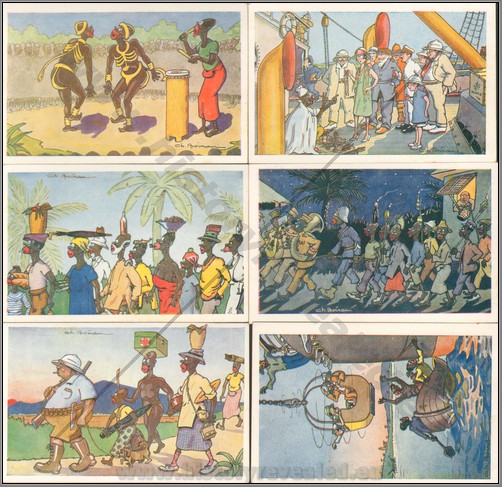 FA 140
Set of 6 colonial humor postcards on Senegal. M
Price: $150.00
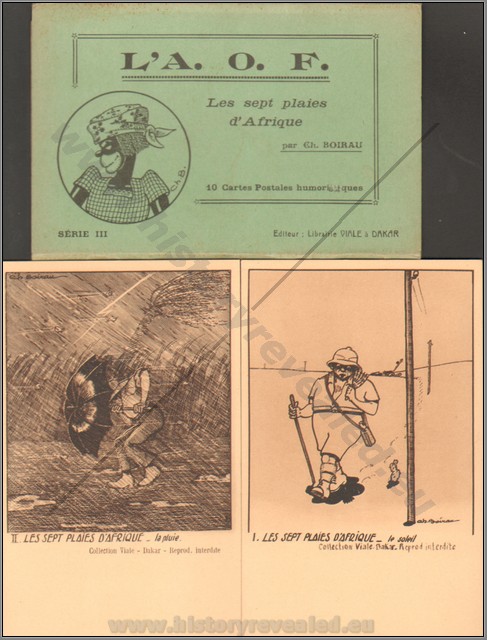 FA 139
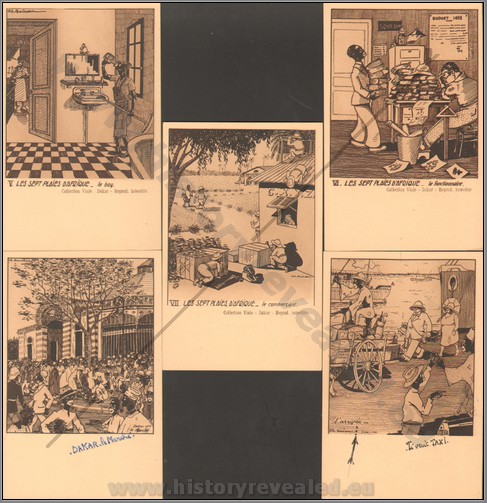 FA 139
Set of 7 colonial humor postcards on Senegal. M
Price: $175.00
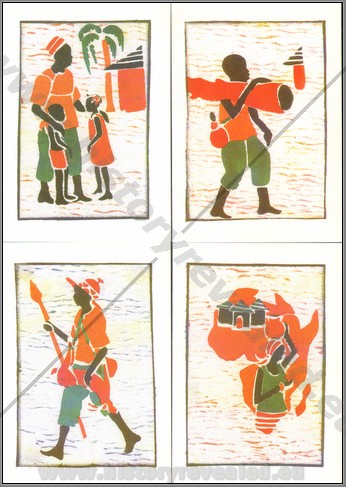 FA 096 FA 096 | Set of 4 greeting cards from the project Makoumi in Burkina Faso. Size 10x15cm. B Price: $20.00 |
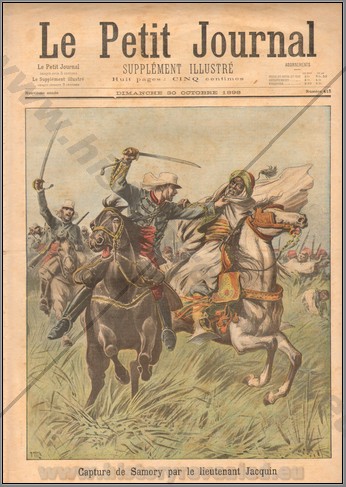 FA 104
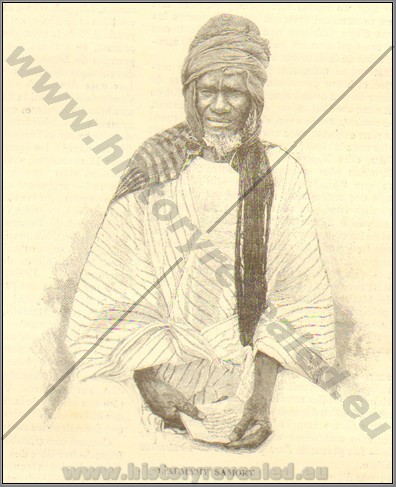 FA 104
Complete 1898 issue of Le Petit Journal featuring the capture of Samory Toure. Also an 1899 French illustration of Samory Toure, from the cover of obscure periodical Le Globe Illustre. eh
Price: $135.00
Note: Samori Toure (c. 1830 – June 2, 1900), also known as Samori Toure, Samory Touré, or Almamy Samore Lafiya Toure, was a Muslim cleric, a military strategist, and the founder and leader of the Wassoulou Empire, an Islamic empire that was in present-day north and south-eastern Guinea and included part of north-eastern Sierra Leone, part of Mali, part of northern Côte d'Ivoire and part of southern Burkina Faso. Samori Ture was a deeply religious Muslim of the Maliki jurisprudence of Sunni Islam. Ture resisted French colonial rule in West Africa from 1882 until his capture in 1898. Samori Ture was the great-grandfather of Guinea's first president, Ahmed Sékou Touré.
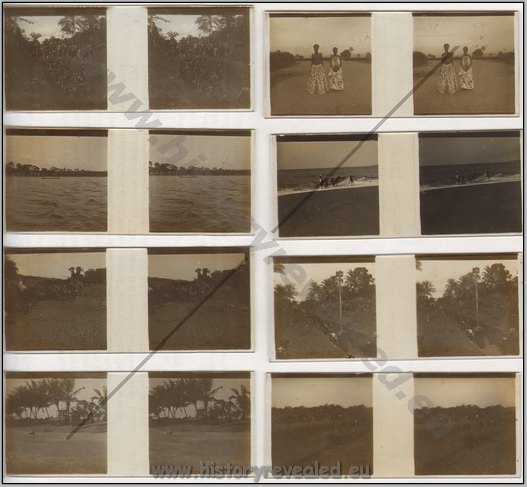 FA 080 FA 080 | 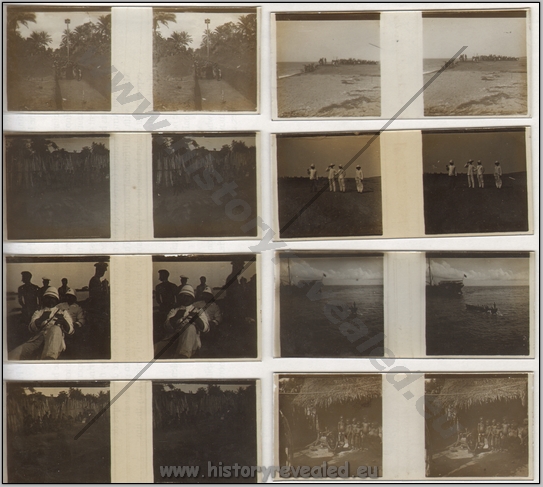 FA 080 FA 080 | 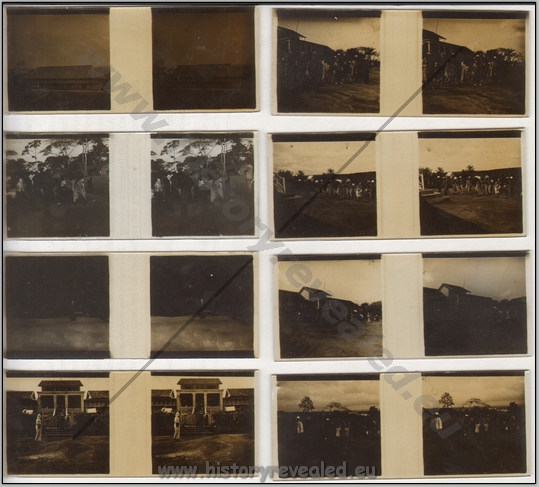 FA 080 FA 080 | 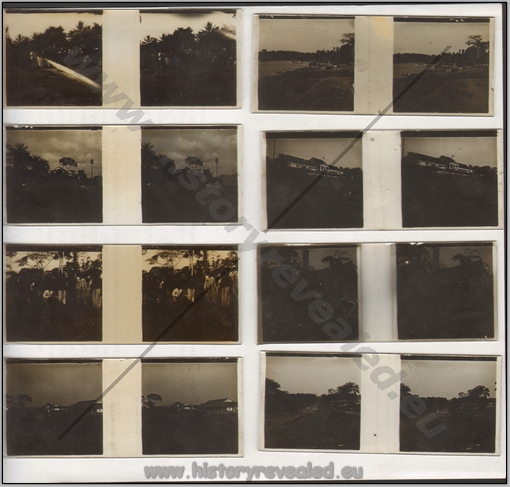 FA 080 FA 080 |
Collection of 38 positive glass slides of Cote d’Ivore taken in 1904. Shows local village nobility, trailleurs, local dancing, dress, village life, village men digging a large pit, colonial administrators close up, children playing, digging a trench through the bush for what appears to be a telegraph line, etc. All slides intact and good condition but no descriptions. If interested, there are slides from Madagascar and Indochina available from the same owner. SOLD
Price: $600.00
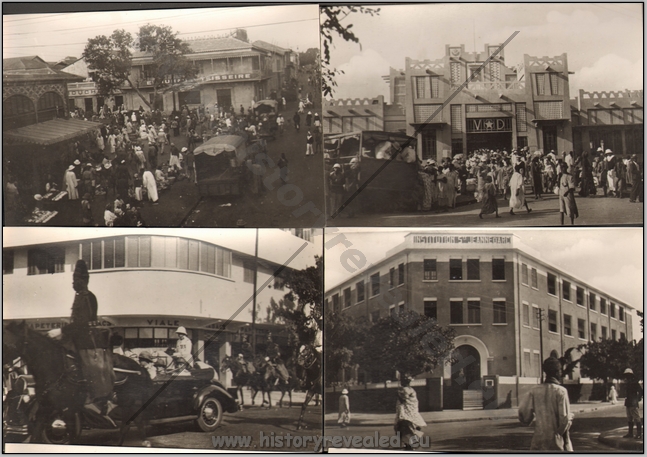 FA 076 FA 076 | Complete set of photographic postcards of General Wegands visit to Dakar. Shown are Wegand with French West Africa governor General General Boisson, the cathedral, a secondary school, the port, L’Institution Sainte-Jeanne d’Arc, native market and the European market. 8 photos with notations on back. SOLD NOTE: General Maxime Weygand, the Vichy French government's commander-in-chief of French Africa, visited Dakar in October 1940 and January 1941 to assert control over the French colonies. The trip took place in the tense period following France's defeat by Nazi Germany and the failed British and Free French attempt to seize the strategic port of Dakar in September 1940. Price: $240.00 | 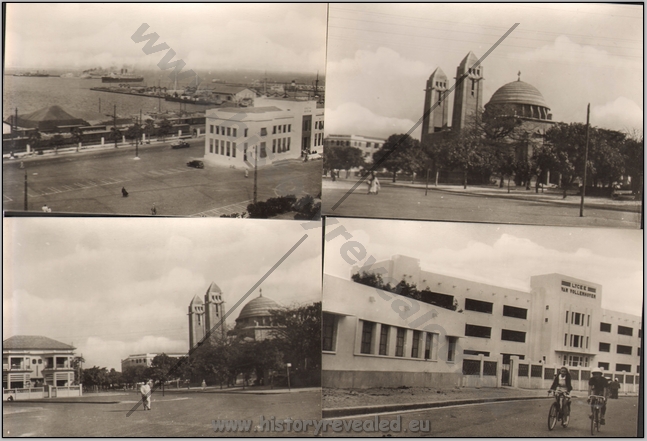 FA 076 FA 076 |
 FA 073 FA 073 | Samples 13 of banknotes from French West Africa as well as Mauratania. Covers the colonial and post-colonial period. B Price: $110.00 | 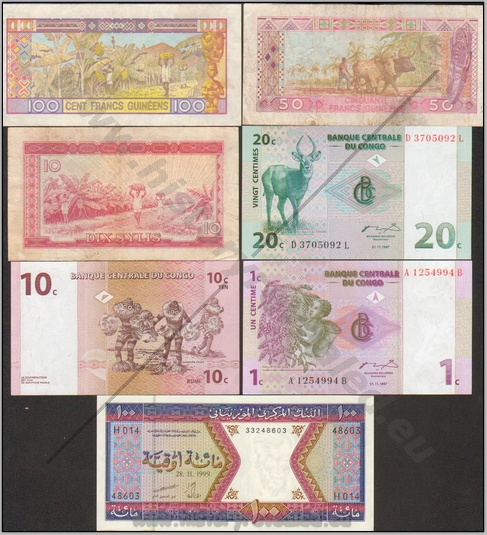 FA 073 FA 073 |
 BCC 255
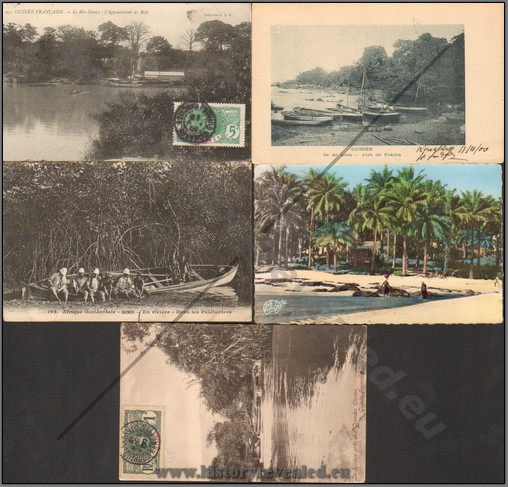
A collection of 5 postcards on river culture in French Guinee. B
Price: $100.00
 BCC 034
 BCC 034
 BCC 034
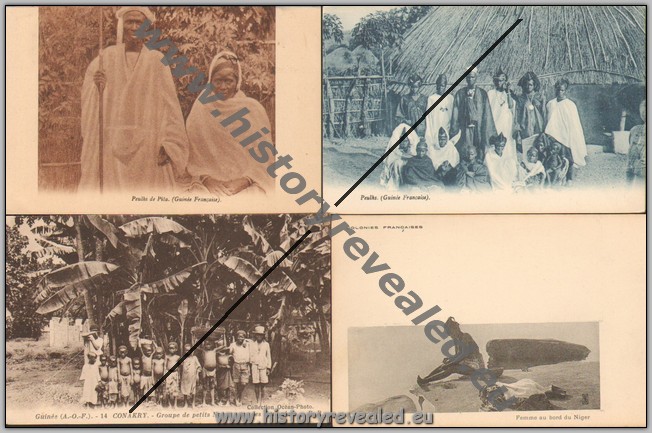
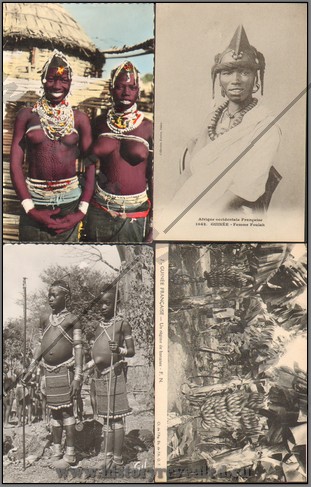
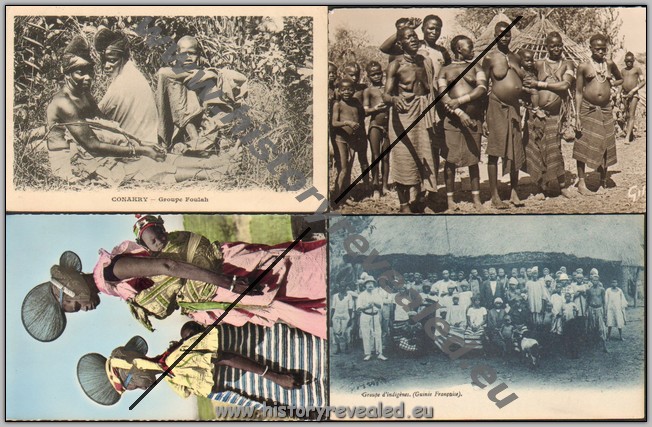
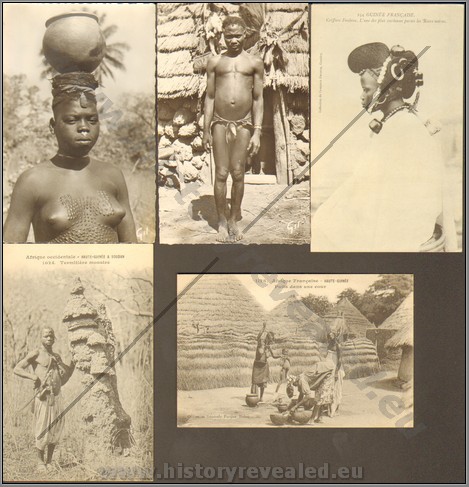
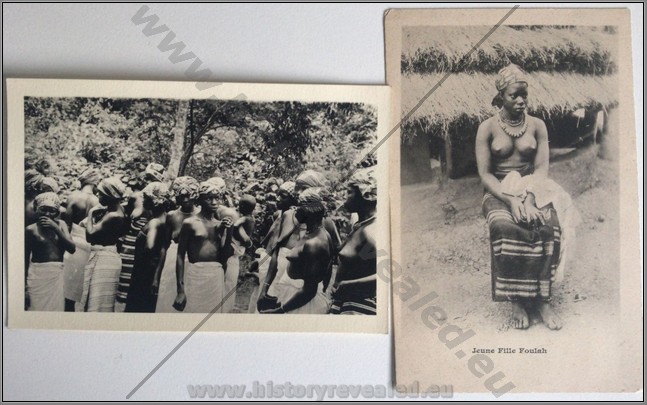
A collection of 47 colonial period postards showing different female types of French Guinee. Shown are Peulhs, Bassari, Foulah, Malinka, Soussou, Guerze, Djallonke, and other unidentified types. B
Price: $1440.00
 BCC 034 BCC 034 | 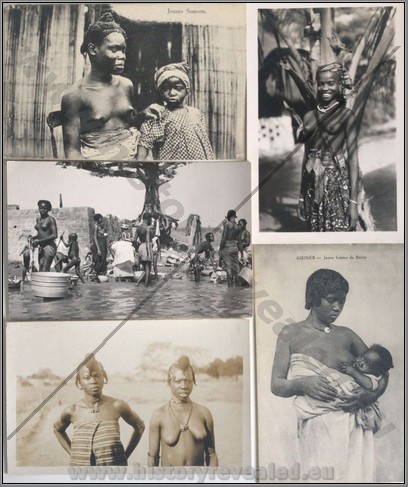 BCC 034 BCC 034 | 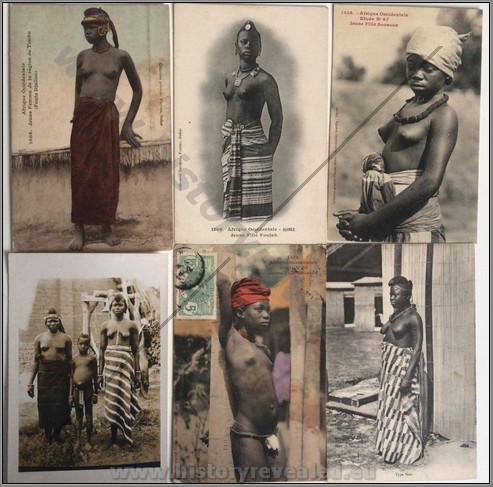 BCC 034 BCC 034 | 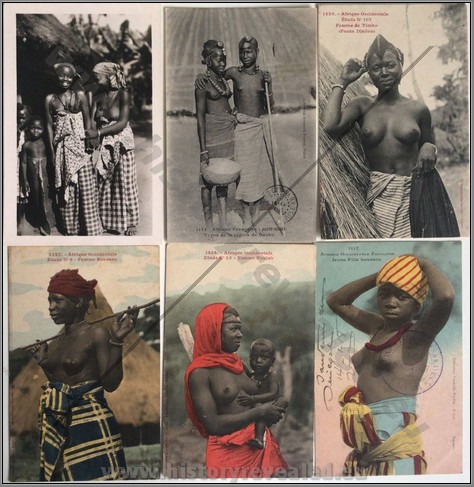 BCC 034 BCC 034 |
 BCC 034 BCC 034 | 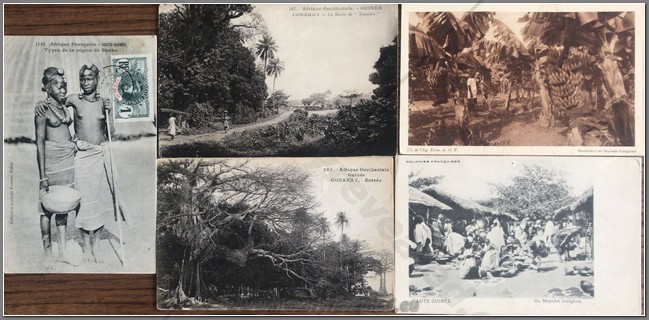 BCC 034 BCC 034 | 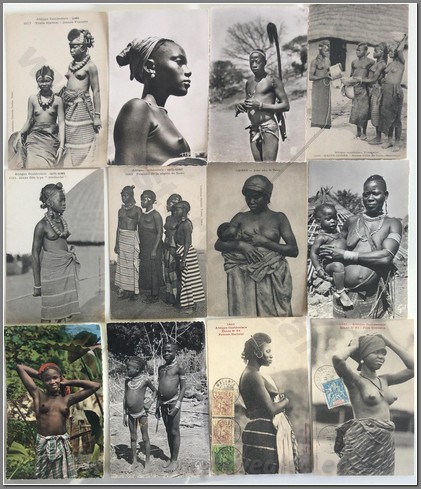 BCC 034 BCC 034 | 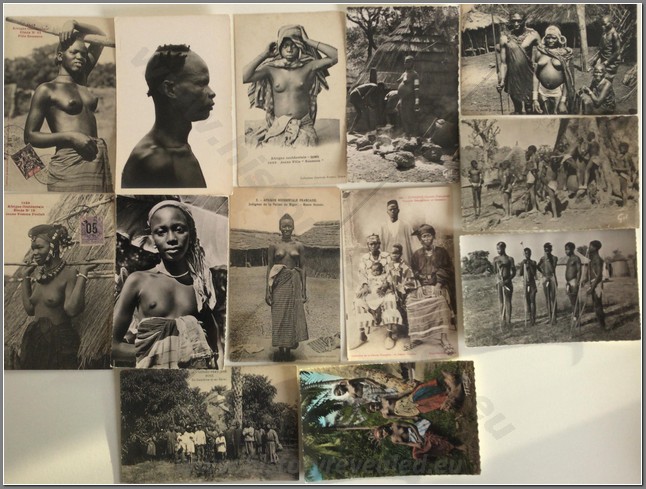 BCC 034 BCC 034 |